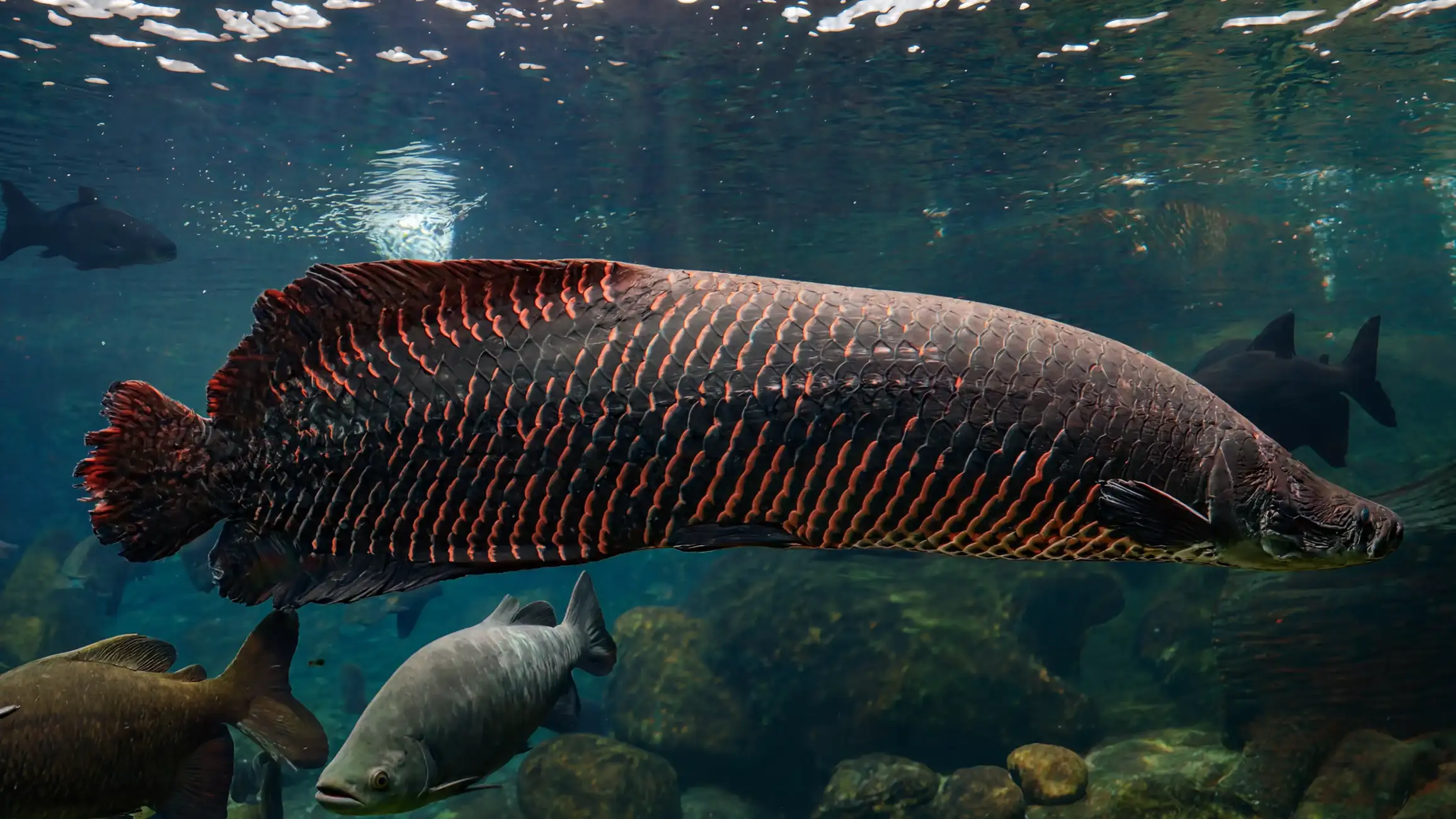
If you are heading to northern Brazil and want something genuinely local—not a repeat of the Rio de Janeiro menu—pirarucu is one of the most reliable choices. This article explains what the fish is, why you can eat it with a clear conscience, which dishes to order, and where to see live fish rather than only a fillet on a plate. For a more unusual regional delicacy, see also the Amazonian mollusk turu.
A fish that breathes air
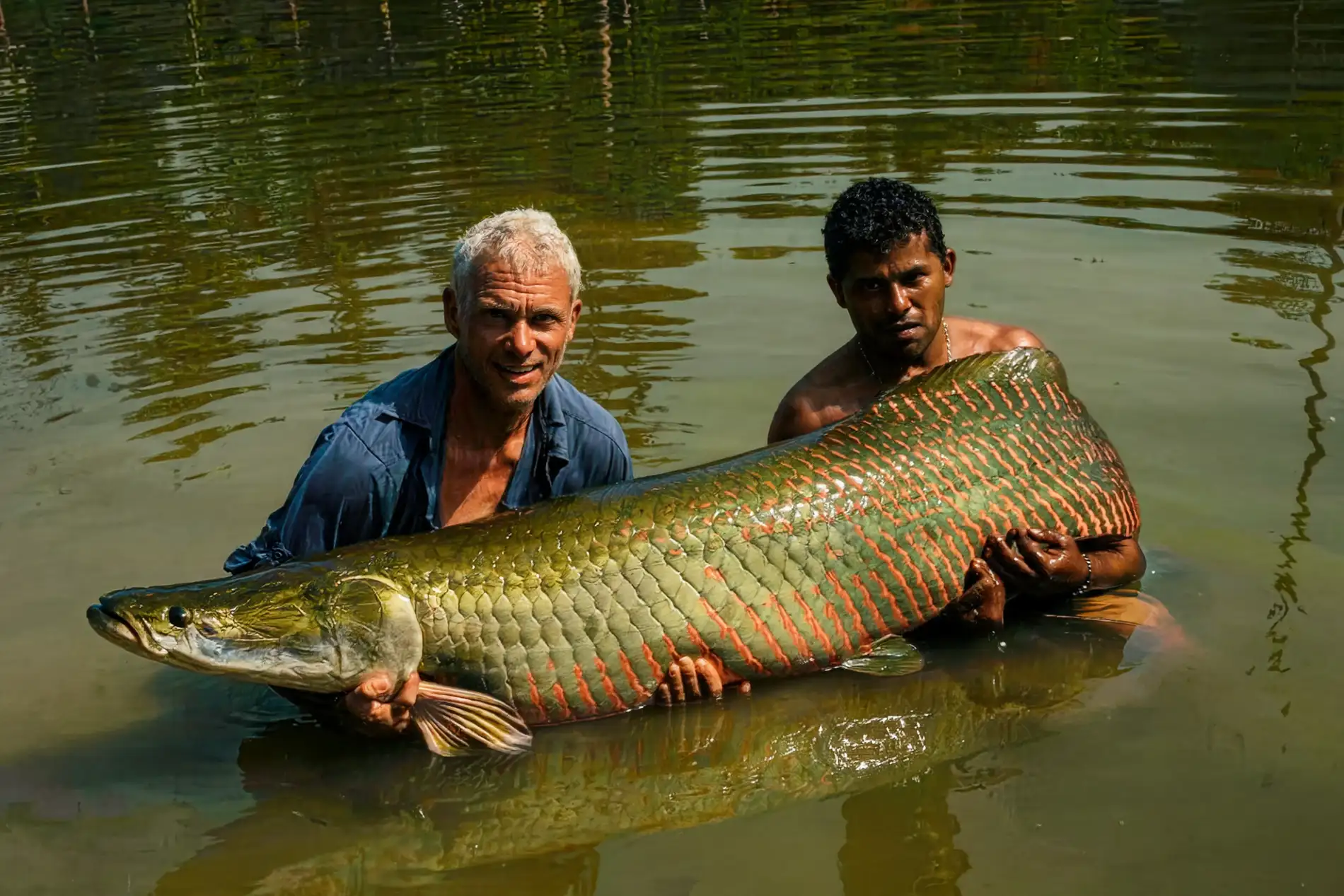
Pirarucu (Arapaima gigas) is one of the largest freshwater fish on the planet. According to Britannica, confirmed specimens reach nearly 3 metres in length and about 220 kilograms in weight. In January 2024 a sport angler near Porto Velho caught and released a fish more than 2 metres long and weighing 130 kg—an ordinary Amazon story, not a record.
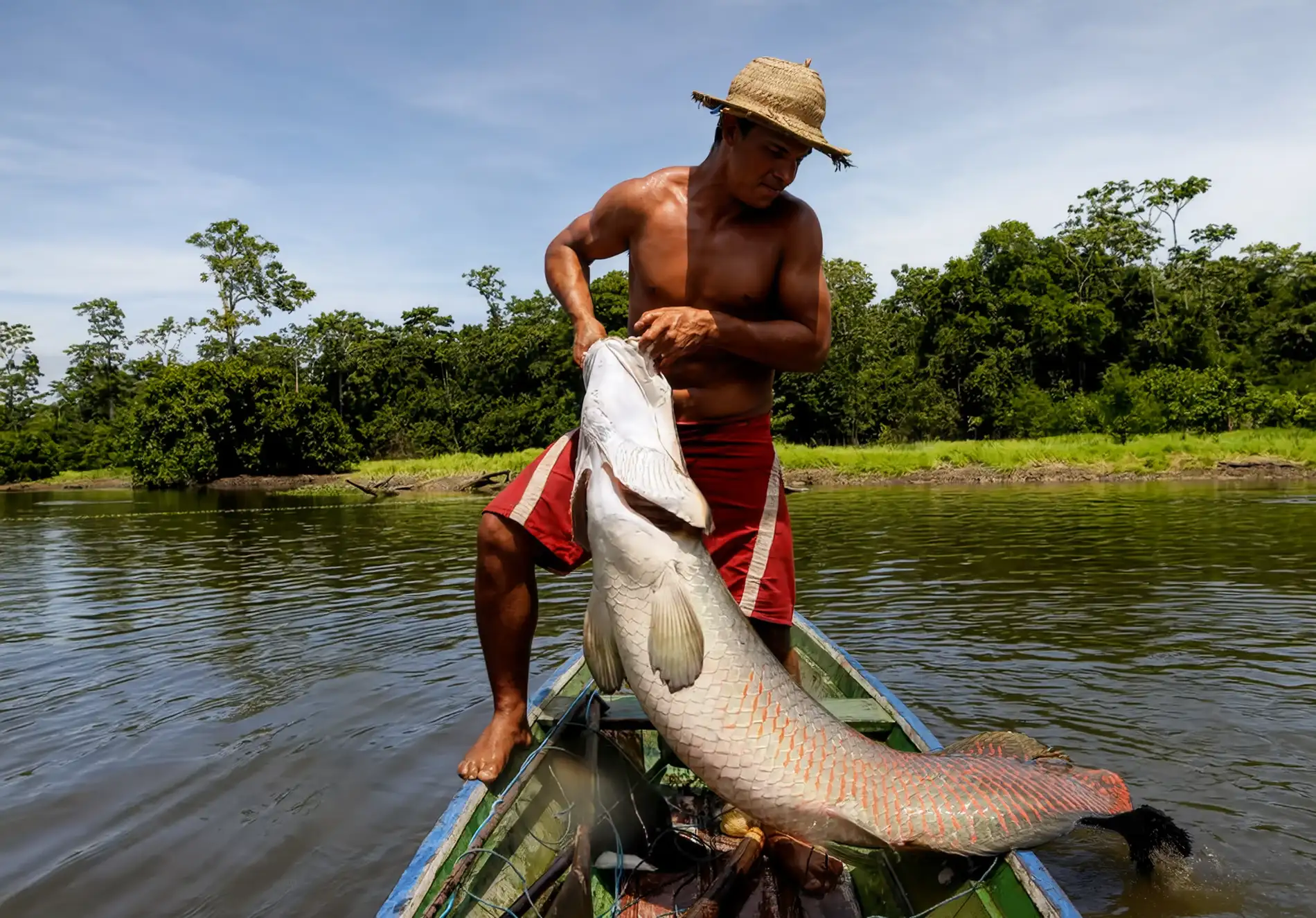
Pirarucu’s main peculiarity is that it cannot live on gills alone. Its swim bladder works as a lung, so the fish must surface for air every 15–20 minutes. Amazon fishers use those rises to count pirarucu visually in lakes—without nets or catch, simply watching when the fish appears. The method is about 95% accurate, and the whole sustainable fishery system described below is built on it.
Where the name comes from
In Tupi-Guarani, pirarucu means “red fish”: pirá is fish, urucú the red dye with which Indigenous people painted the body. An adult’s tail really does have a reddish colour.
Among Indigenous peoples of the Amazon there is a legend about a warrior of the Uaia people named Pirarucu—strong, but cruel and arrogant. For disrespecting the gods and harming his own people, the god Tupan punished him by turning him into a huge scaled fish with a flattened head. The story is not history, but it helps explain why, for people of the Amazon, pirarucu is not only a commercial fish but a figure with its own mythology.
Why the “manejado” label matters
In the twentieth century pirarucu nearly disappeared because of uncontrolled fishing: the fish stays near the surface and is easy to take with a harpoon. The situation changed after 1999, when the Mamirauá Institute began introducing community fishery management in the Mamirauá and Amanã reserves (Amazonas state).
The system works like this: fishing communities count pirarucu in their lakes each year, and the next year’s catch quota does not exceed 30% of the adult population. From 1 December to 31 May, during flood and spawning season, all catch is banned. According to the Mamirauá Institute, in the Middle Solimões area the population grew from 2,507 fish in 1999 to more than 190,000 in 2018.
For a visitor that means something simple: if a menu or market stall says “pirarucu de manejo sustentável” or simply “manejado,” you are buying fish from a system that actually restored the species, not from poaching. Fish with that label also has a traceability chain—the fishing group and the lake of origin are recorded.
What to order
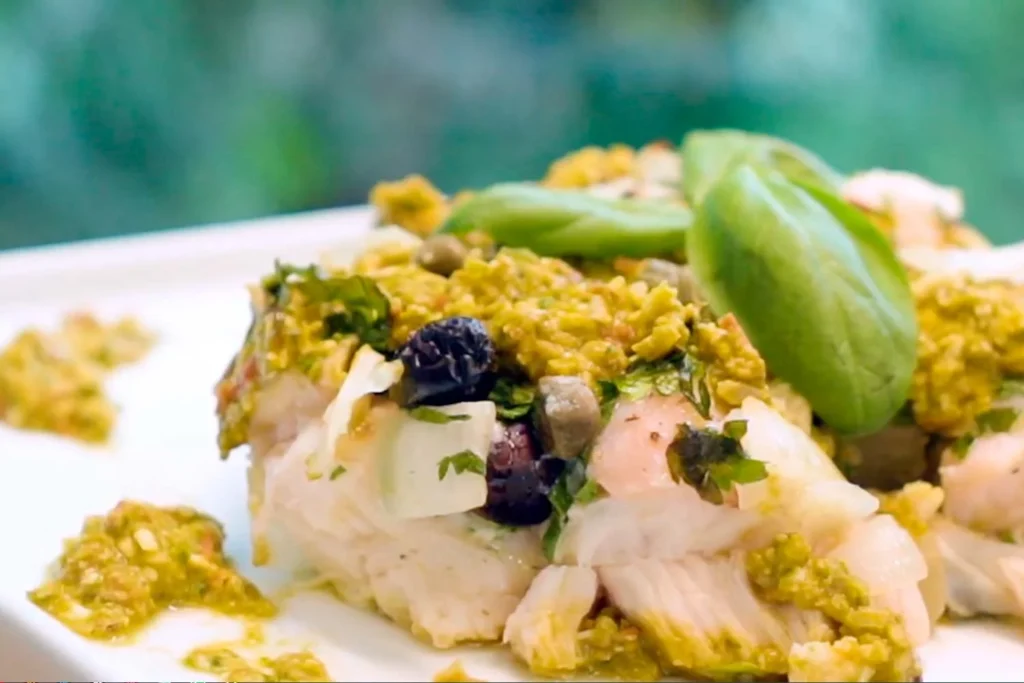
Pirarucu de casaca is the main dish for a first encounter with the fish. It is a layered bake: salted fish that has been soaked, manioc farofa with coconut milk, pacova banana (a local variety), boiled egg, and olives. The dish is traditionally served for special occasions in Amazonas and Pará and is cooked both at home and in restaurants.
Moqueca de pirarucu is fish stewed with tomatoes, peppers, coriander, and dendê palm oil, served with rice—lighter and spicier than casaca.
Salted and dried pirarucu (“Brazilian bacalhau”) is sold in slabs at markets and used in the same kinds of dishes as salt cod elsewhere in Brazil.
For a restaurant version in Belém, try Casa do Saulo Onze Janelas (Rua Siqueira Mendes, Cidade Velha) for pirarucu pastries, or Igara Cozinha Regional (Travessa Gurupá, 436) for pirarucu croquettes. In Manaus, pirarucu dishes appear on most Amazonian restaurant menus—it is everyday food, not a rarity.
Where to see the fish live or on the stall
Ver-o-Peso market in Belém is the largest open-air market in Latin America, on the Guajará Bay waterfront. The fish pavilion is open from 6:00 to 14:00. Here pirarucu is sold both as fresh large cuts and dried—an easy place to see the fish’s size in person even if you do not plan to cook it yourself.
The Mamirauá and Amanã reserves (Tefé area, Amazonas state) can be visited on tours arranged through the Mamirauá Institute or local agencies in Tefé. Visitors see the sustainable fishery itself: counting fish by surfacings and the work of fishing cooperatives. Each year Tefé hosts the “Feira do Pirarucu de Manejo Sustentável,” a fair that sells only certified fish from managed lakes. If your trip coincides with the dates, it is a good way to see the whole chain from lake to stall.
In the wild, pirarucu is easier to encounter in flood season, when the fish moves into flooded forest (várzea) near major rivers. Without a guide and a boat it is unlikely: the fish stays in calm, slightly alkaline lake and backwater habitats, not on the main channel.
What to remember
Include pirarucu in your itinerary as a practical item, not only as a photo for social media: one specific dish (casaca or moqueca) and one specific place—a market, restaurant, or reserve. If you see the “manejado” label, buy with confidence: this fish shows how managed fishing brought a species back from the edge of disappearance. If fish is sold with no labeling at all, and in large volumes outside the permitted season, choose another stall.