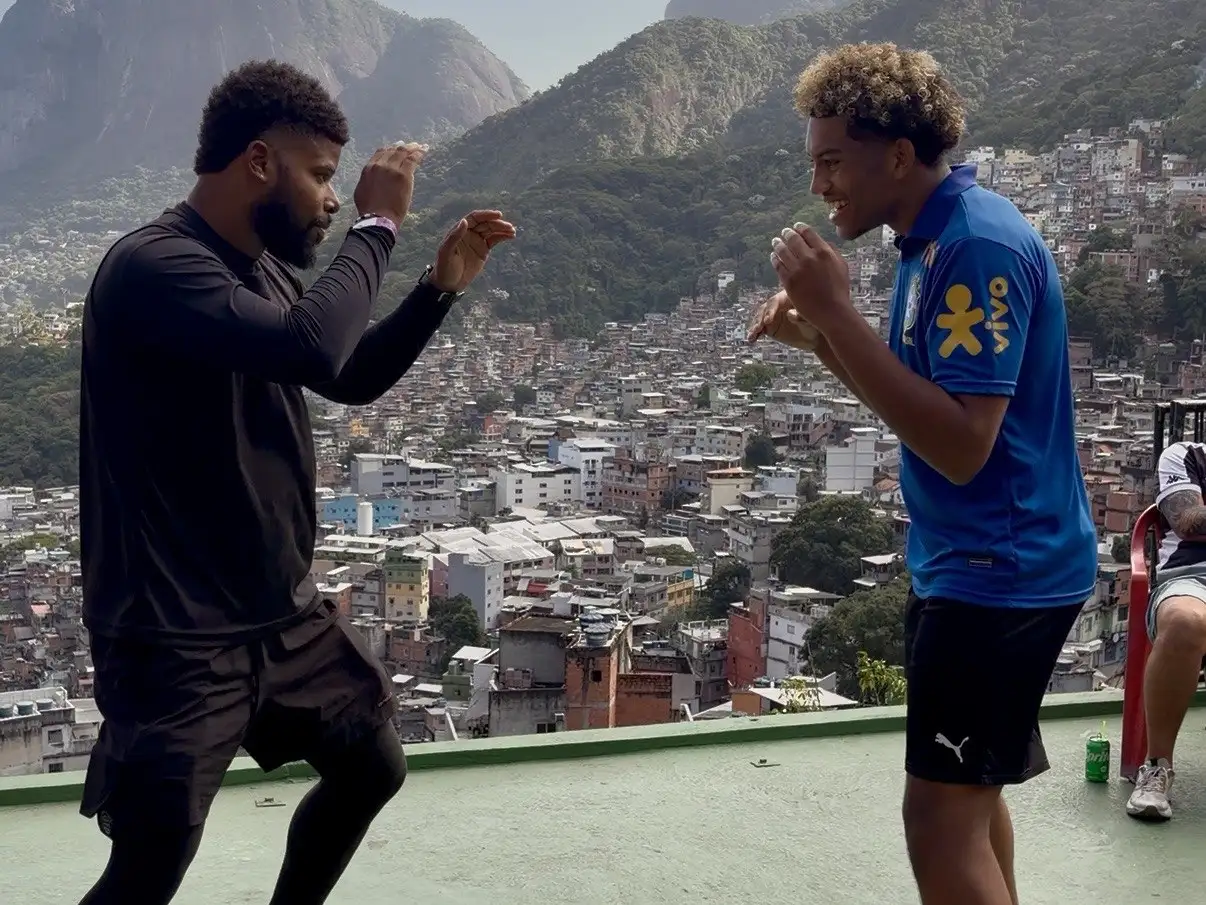
Five years ago, a list of things to do in Rio was predictable: Christ the Redeemer, Sugarloaf Mountain, and the Selarón Steps. Today it increasingly includes a place that was rarely mentioned before—a rooftop in Rocinha, where a drone pulls back to reveal the favela flowing down the hillside toward the ocean. The wait for this shot can reach two hours, and the video costs around R$150–200. That is more than a ticket to Christ the Redeemer.
The format did not appear by accident. Na Favela Turismo, founded by Rocinha resident Renan Monteiro, has trained about 300 local guides and around a dozen drone operators. The operators use an app connected to the guides: if a police operation against drug traffickers begins inside the favela, tours are cancelled immediately. For rooftop owners, guides, and small businesses along the route, tourism has become a real source of income in a neighborhood where formal employment has long been limited.
The wider tourism numbers help explain the trend. Rio received 12.5 million visitors in 2025, including 2.1 million international travelers, a segment that grew by almost 45% in one year. Bookings from the United States and Europe are rising rapidly. Favela visits are no longer a niche activity for backpackers; they have become part of itineraries shared by major travel creators and discussed in travel groups.
Why Rocinha?
Rocinha is Brazil’s largest favela, with about 70,000 officially registered residents and probably more in practice. It sits between São Conrado and Gávea, roughly one kilometer from the beach. From several viewpoints, you can see something found nowhere else in Rio: dense hillside housing and expensive condominiums below in the same frame. That contrast is what made Rocinha so visible on social media.
You cannot reach the Porta do Céu rooftop viewpoint independently. Access is with a guide through a maze of narrow streets where ordinary neighborhood life continues around the route: workshops are open, residents prepare takeaway food, and people sit outside their homes. Tours often stop at local artists’ studios and sometimes include capoeira. This is not a set built for visitors; it is a living neighborhood that has adapted to a steady flow of people carrying cameras.
Why favela tourism is debated
Not everyone in Rocinha welcomes the trend. Some residents believe it turns the neighborhood into a backdrop for content: visitors record a dramatic video and leave without learning about a place affected by armed groups and serious gaps in basic infrastructure. The criticism most often heard is the “romanticizing of poverty”—presenting a complex neighborhood and its real problems as an attractive background for social media.
Na Favela Turismo’s founder disagrees. He says the company’s goal is to challenge the idea of a favela as a dangerous ghetto, not to make poverty look picturesque. Both positions have a long history. Debate over tours in low-income neighborhoods began in the early 2000s, when the first so-called slum tours appeared in Rio and Cape Town.
The argument in favor is that money reaches the neighborhood through guides, food, souvenirs, and workshops, while direct contact gradually changes outside perceptions of favela life. The argument against is that visitors may see a curated display rather than daily reality, and residents may have little influence over how their community is presented when outside operators control the route and story.
There is no simple answer. For a visitor deciding whether to go, the useful distinction is between a tour led by someone from the community—one that brings income into the neighborhood and explains its context—and the old model of driving through simply to look at poverty. The latter has become far less common in Rio, largely because of years of criticism.
What the visit is actually like
A favela is neither an open-air museum nor an attraction. It is a functioning neighborhood whose residents include doctors, musicians, lawyers, shop owners, and entrepreneurs, as well as people living in serious poverty. Some areas are controlled by armed groups. That is not an abstract detail from the news; it is why established routes rely on guides who understand the neighborhood.
With a local guide, the experience is a straightforward walk through narrow streets and steep stairways, past small restaurants and viewpoints found nowhere else in the city. Going alone does not mean danger at every moment, but it creates an unnecessary risk: you do not know which areas are calm that day, where an operation may be taking place, or how to read situations that are obvious to a resident.
The practical approach is simple: go with someone who knows the neighborhood from the inside, can explain what you are seeing, and understands today’s conditions rather than yesterday’s. Whether a favela visit belongs in your Rio itinerary is a personal choice. If you go, look beyond the drone footage and pay attention to where you are, who is telling the story, and who benefits from your visit.