Who this is for: travelers arriving in Rio with foreign cash or planning to withdraw Brazilian reais after arrival.
Exchanging money in Rio looks straightforward until a poor choice costs you several percentage points—or an exchange office refuses the banknotes you brought. This guide explains where cash exchange works, where it does not, and how to use an international card without accepting avoidable conversion costs.
At the airport: a good rate can hide a poor total
Exchange offices at Rio Galeão Airport (GIG) may display a rate that looks close to the market rate. The problem is often the commission. It may be built into the final amount or shown as a separate fee that is easy to miss, leaving you with fewer reais than expected.
Exchanging a small amount at the airport for immediate expenses is reasonable. Exchanging most of your travel cash there usually is not.
Banks are not the practical answer
Walking into a bank branch to exchange foreign cash sounds logical, but ordinary branches in Rio generally do not provide walk-in currency exchange for tourists. Do not spend part of your trip searching from bank to bank.
Look for a câmbio office
Specialist currency-exchange desks in Rio often operate inside or alongside travel agencies. Look for the word câmbio. They are concentrated in visitor districts such as Copacabana, Ipanema, and Leblon.
Before exchanging a significant amount, check two or three nearby offices and compare the final number of reais you will receive. Rates can vary even along the same street—sometimes by R$0.20–0.30 per US dollar.
Identification: some exchange offices ask for a passport and record the customer’s details. Many small desks inside travel agencies either do not request a document or only inspect it briefly. Requirements vary by business, so carry identification when possible.
Using an international card
International Visa and Mastercard cards are widely useful in Rio, but acceptance by a particular terminal or ATM depends on the issuing bank, card settings, and network. Before traveling, confirm that international transactions and cash withdrawals are enabled and check your bank’s foreign-transaction and cash-withdrawal fees.
If a card terminal or ATM offers to convert the transaction into your home currency, look at the rate and markup before accepting. This service is called Dynamic Currency Conversion. Visa explains that the choice must be shown to the cardholder and that declining it does not prevent an international purchase or withdrawal. In most travel situations, choosing Brazilian reais (BRL) lets your card issuer or payment network handle the conversion instead. See Visa’s official explanation of Dynamic Currency Conversion.
ATMs: avoid repeating a fixed fee
Rio has ATMs that accept international cards and dispense Brazilian reais. Many suitable machines are found in major shopping centers and at some metro stations. Check the card-network logos displayed on the ATM before inserting your card.
An ATM operator may charge a local fee, and your own bank may separately charge for an international cash withdrawal or currency conversion. When the operator’s fee is fixed per transaction, several small withdrawals cost more than one larger withdrawal. The amount available per transaction depends on the machine and commonly falls between R$500 and R$1,000; the exact limit is shown on screen before confirmation.
Use ATMs in controlled indoor locations when possible, protect your PIN, and keep enough flexibility to try another bank’s machine if the first one rejects your card.
US dollars: condition and denomination matter
If you bring US dollars in cash, the physical banknotes matter.
Older designs. Many exchange offices either refuse older banknotes—especially notes issued before 2006—or apply a noticeably worse rate. Ask your bank for current-design bills before traveling.
Smaller denominations. Notes of $10, $20, and $50 may also receive a worse rate or be refused. Exchange offices generally prefer larger bills because they are easier to process and store.
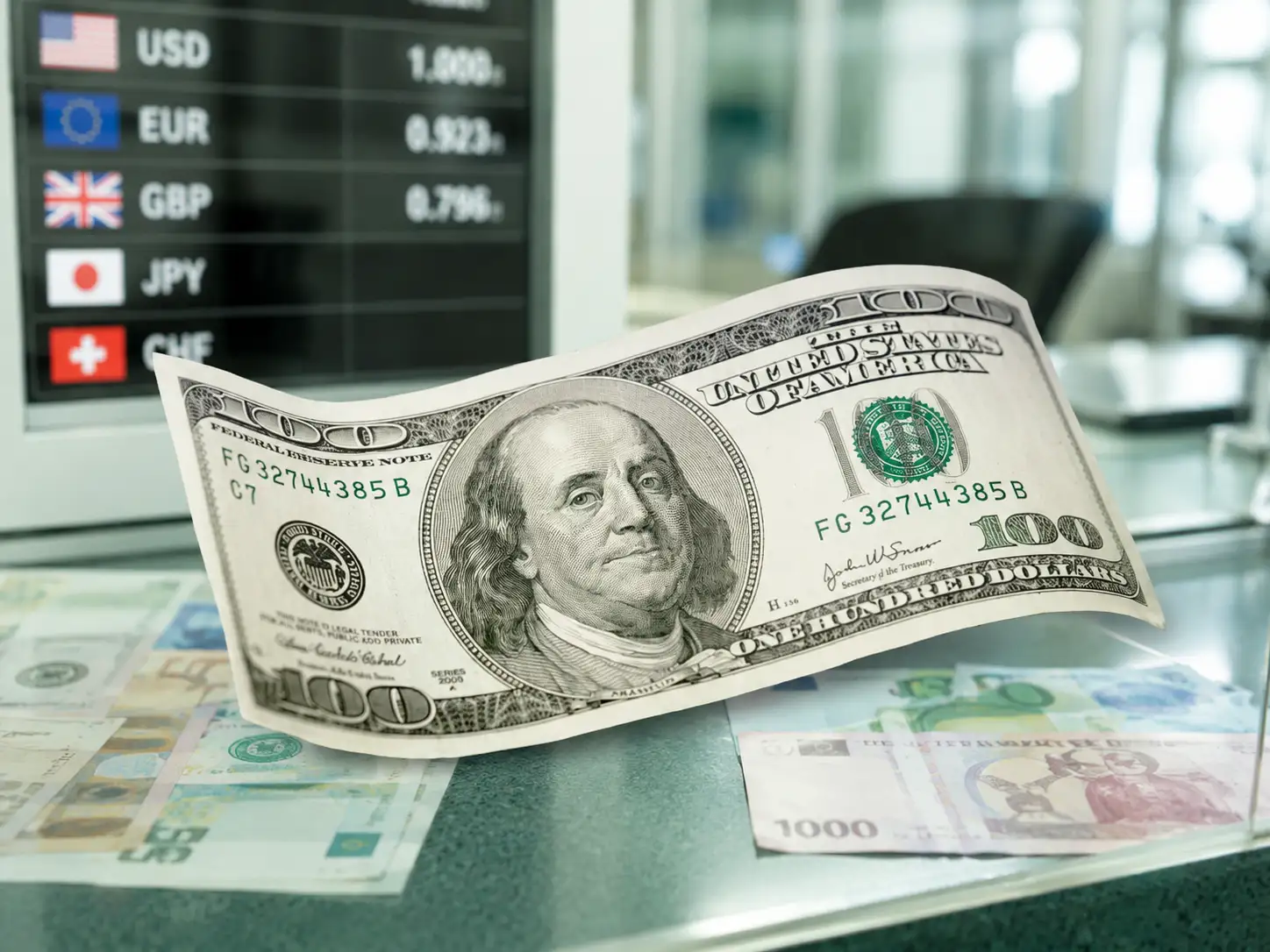
The simplest option is to bring clean, current-design $100 notes. They normally receive the best cash rate and generate the fewest questions.
How much do you lose when exchanging cash?
Cash exchange rates in Rio are commonly 5–10% away from the official market rate. If the market rate is R$6.00 to the dollar, for example, a cash exchange office may offer R$5.50–5.70. On $500, the difference can be R$150–300 compared with the headline market rate.
During busy visitor periods, exchange offices receive more foreign cash and may offer slightly less favorable terms. That is another reason to compare a few desks before exchanging a large amount.
Paying for a tour in US dollars
Some tour agencies and excursion companies in Rio accept US-dollar cash. They generally prefer current-design $100 notes and may reject older or smaller bills. Ask in advance whether any remaining balance can be paid in reais.
The practical takeaway
- Airport exchange: useful for a small amount on arrival, but commissions can make a large exchange expensive.
- Bank branches: generally do not exchange foreign cash for walk-in tourists.
- Câmbio desks: the main option for cash. Compare the final amount at two or three offices.
- International cards: check your own bank’s fees and choose BRL when you do not want the ATM or merchant to perform Dynamic Currency Conversion.
- ATMs: use a secure indoor location and avoid several small withdrawals when a fixed fee applies.
- US-dollar cash: clean, current-design $100 bills usually receive the best rate.