For travelers who have already seen Christ the Redeemer and Sugarloaf and want to add one more day—or night—to a Rio itinerary. This guide explains what the park is, when to go, how to get there, and what an organized stargazing tour costs.
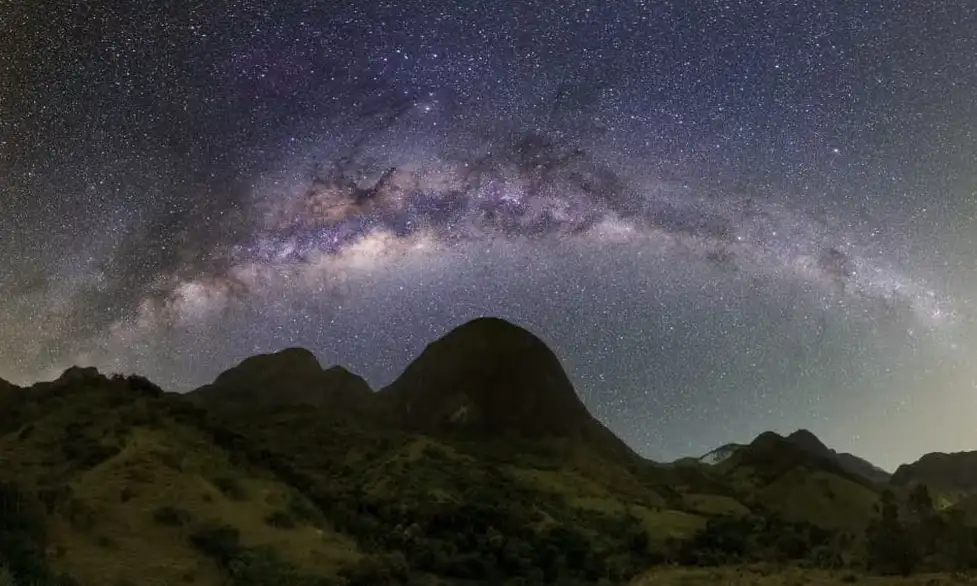
On a clear night, a rooftop in Copacabana may reveal only a few dozen stars because the city’s light overwhelms the sky. Four hours from the same beach, around 3,000 stars can be visible. In December 2021, Parque Estadual do Desengano in Rio de Janeiro state became Latin America’s first certified Dark Sky Park—a protected place where light pollution is low enough for the Milky Way to be visible to the naked eye.
Why travel somewhere dark?
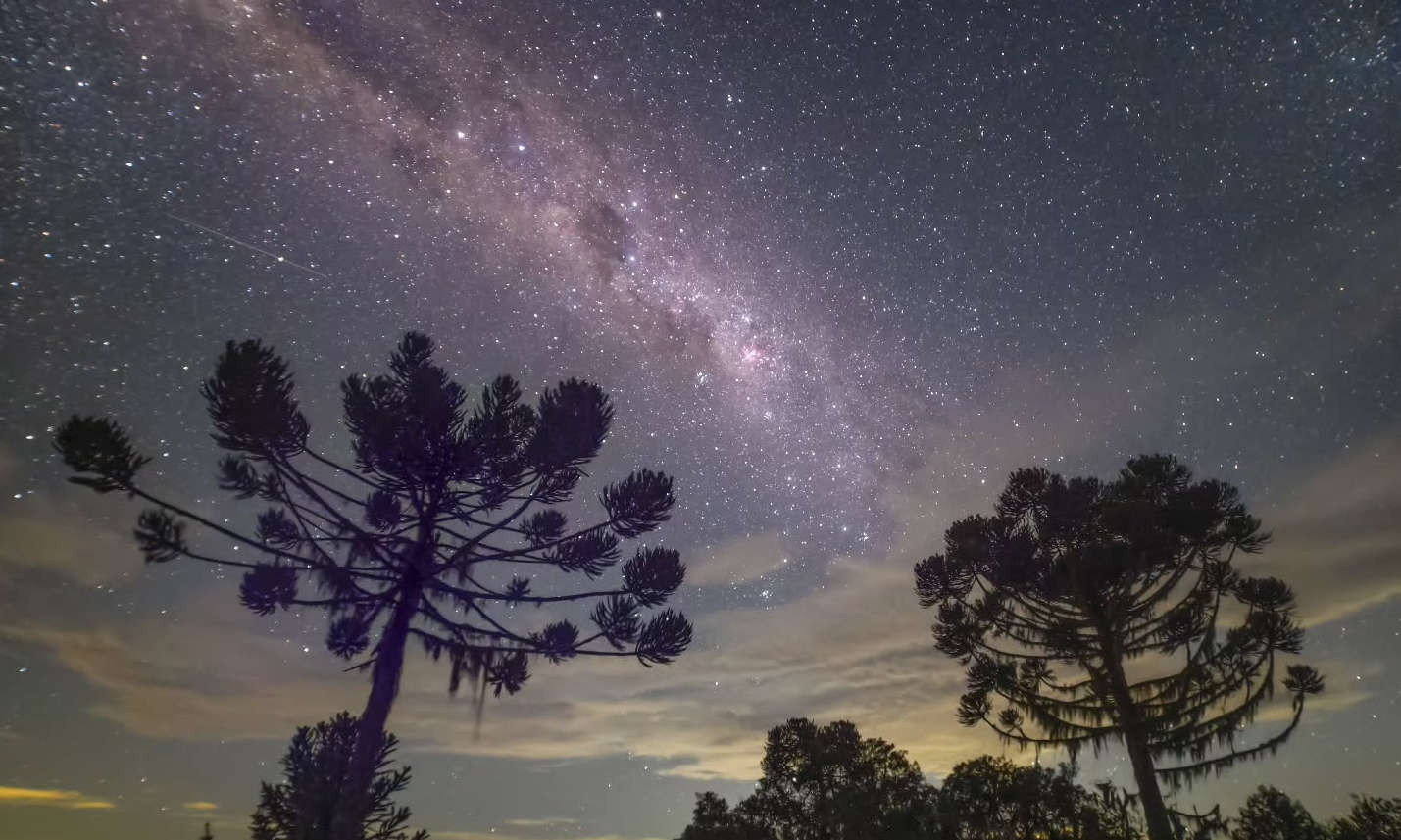
Astrotourism means traveling to observe stars, planets, and the Milky Way where artificial light does not interfere with the night sky. Sky quality is commonly described using the Bortle scale, from Class 1—an exceptionally dark location far from cities—to Class 9, a bright urban center where only the Moon and the brightest planets are easy to see.
Rio’s beachfront avenues and street lighting place much of the city around Classes 8–9. Even an expensive telescope cannot overcome the glow scattered through the atmosphere. The unaided eye under a Class 1–2 sky can reveal more than a telescope in central Rio.
Desengano is not Brazil’s only candidate for dark-sky recognition. Since late 2025, Serra do Brigadeiro State Park in Minas Gerais has been preparing a similar application after research found that its sky meets international criteria. Until that certification is granted, Desengano remains Latin America’s first and only certified Dark Sky Park.
Why Parque Estadual do Desengano?
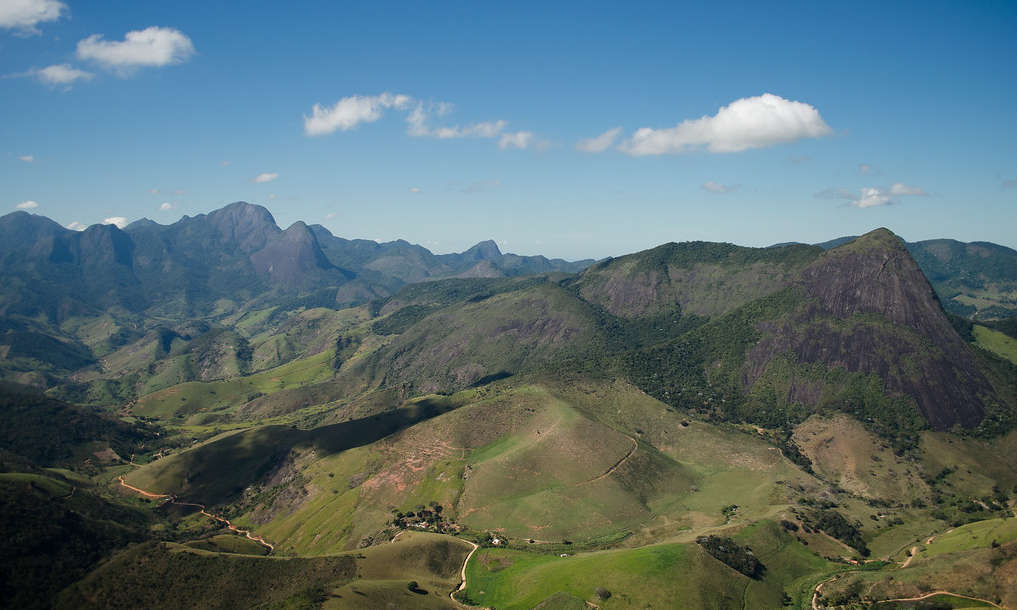
Created in 1970, the park protects 22,400 hectares of Atlantic Forest across Santa Maria Madalena, São Fidélis, and Campos dos Goytacazes. It is managed by Rio de Janeiro state’s environmental institute, INEA.
DarkSky International—formerly the International Dark-Sky Association—certified the park after measurements showed an average sky brightness of 21.75 magnitudes per square arcsecond. That is close to 22, the association’s benchmark for an exceptionally dark sky, and allows the Milky Way to appear with strong detail.
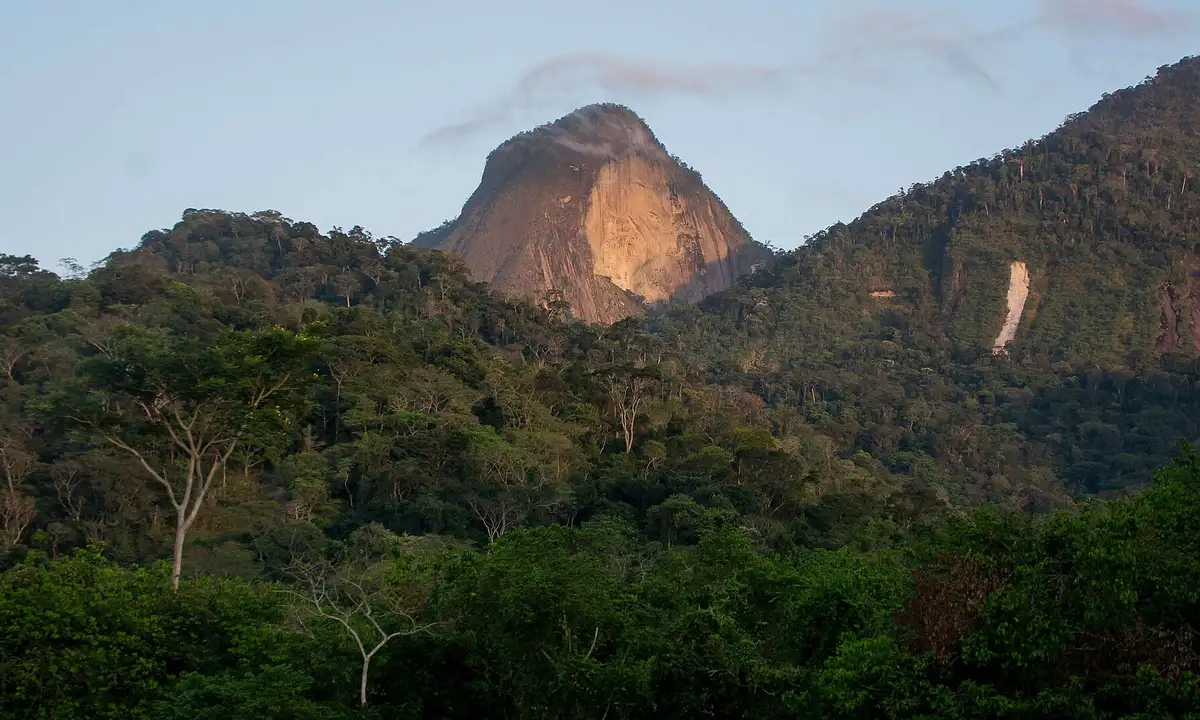
The park’s highest point is Pedra do Desengano at 1,761 meters. Its steep 3.6-kilometer trail takes about four hours to climb and requires good fitness. This is a separate daytime hike. Stargazing does not require reaching the summit: observing areas and telescope sites are near the park headquarters and surrounding rural lodges.
Santa Maria Madalena, the “City of Stars”
Santa Maria Madalena is a mountain town of roughly 10,000 residents near the park in the northern part of Rio de Janeiro state. On January 10, 2022, the state governor signed Law 9,543/2022, officially granting it the title Cidade das Estrelas—City of Stars—and allowing the state to promote local astrotourism.
In July 2026, a bill was introduced in Brazil’s Chamber of Deputies proposing the federal title National Capital of Astrotourism. At the time this article was prepared, the bill had not yet passed.
The town hosts the annual Festival das Estrelas, a free festival featuring astronomers from the National Observatory and UFRJ, a mobile planetarium, solar observations, workshops, and night sessions inside the park. Dates vary: the 2026 event took place on April 17–19, while earlier editions were held in August. Some evening activities require advance registration because places are limited. Check the Madalena Convention & Visitors Bureau program before traveling.
What can you see?
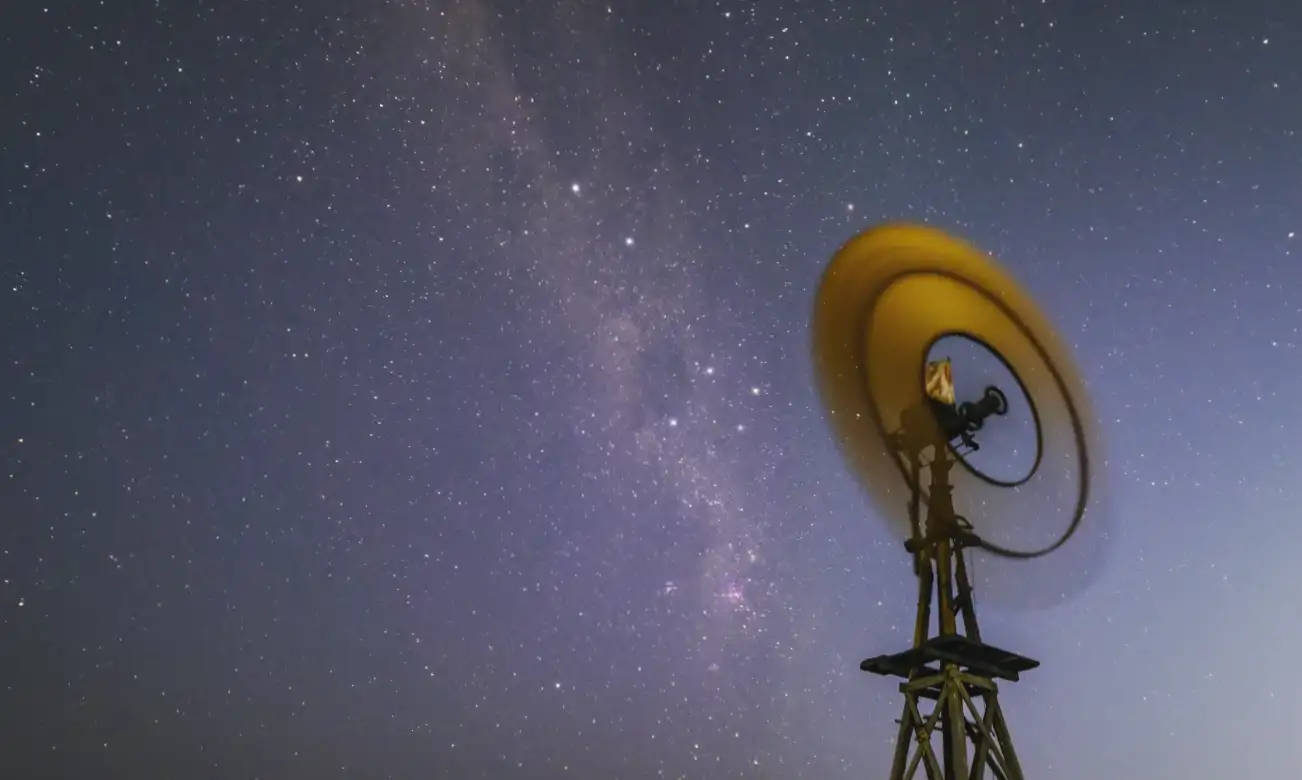
On a moonless night, the bright core of the Milky Way, the Southern Cross, and both Magellanic Clouds are visible without a telescope. The Magellanic Clouds are satellite galaxies found deep in the southern sky and cannot be seen from most of the Northern Hemisphere. Meteors and moving satellites are also easy to notice.
Through a telescope, observers can see lunar craters, Jupiter and its four largest moons, Saturn’s rings, star clusters, and nebulae that disappear into the glow above a city.
When to go
The best season is determined by southeastern Brazil’s climate rather than the holiday calendar. From April to October, drier air dominates during the Southern Hemisphere’s autumn and winter, making clear skies more likely than during the humid tropical summer. The Milky Way’s bright core returns to the evening and early-morning sky in April and rises high by around 4 a.m.
| Month | Typical observing conditions |
|---|---|
| April | Beginning of the season; the Milky Way core becomes visible again |
| May–July | Consistently drier weather and longer nights |
| August | Peak season and sometimes the festival period |
| September–October | Final weeks of generally stable dry weather |
| November–March | Humid summer, more cloud, and less predictable observing |
The Moon’s phase matters as much as the season. Near new moon, the sky is darkest and faint objects such as nebulae, clusters, and the Milky Way core are easiest to see. A full moon hides those objects but remains an excellent telescope target along with bright planets such as Jupiter and Saturn. Local operators schedule sessions around moon phases and publish exact dates closer to the season.
Getting there from Rio
Santa Maria Madalena is around 250–260 kilometers from Rio de Janeiro. Driving takes roughly four hours via BR-101 and state roads. A direct Viação 1001 bus leaves Rodoviária Novo Rio once per day, takes around seven hours, and costs approximately R$120 each way. The return service leaves Santa Maria Madalena early in the morning. Check the operator’s current schedule and fare before traveling.
| Transport | Travel time | Main consideration |
|---|---|---|
| Car | About 4 hours | Flexible timing, but someone must drive both ways |
| Direct bus | About 7 hours | One departure per day; book ahead |
Some agencies arrange transfers through Nova Friburgo. A connection there can be faster or cheaper than the direct bus but requires careful timing.
What an organized tour includes
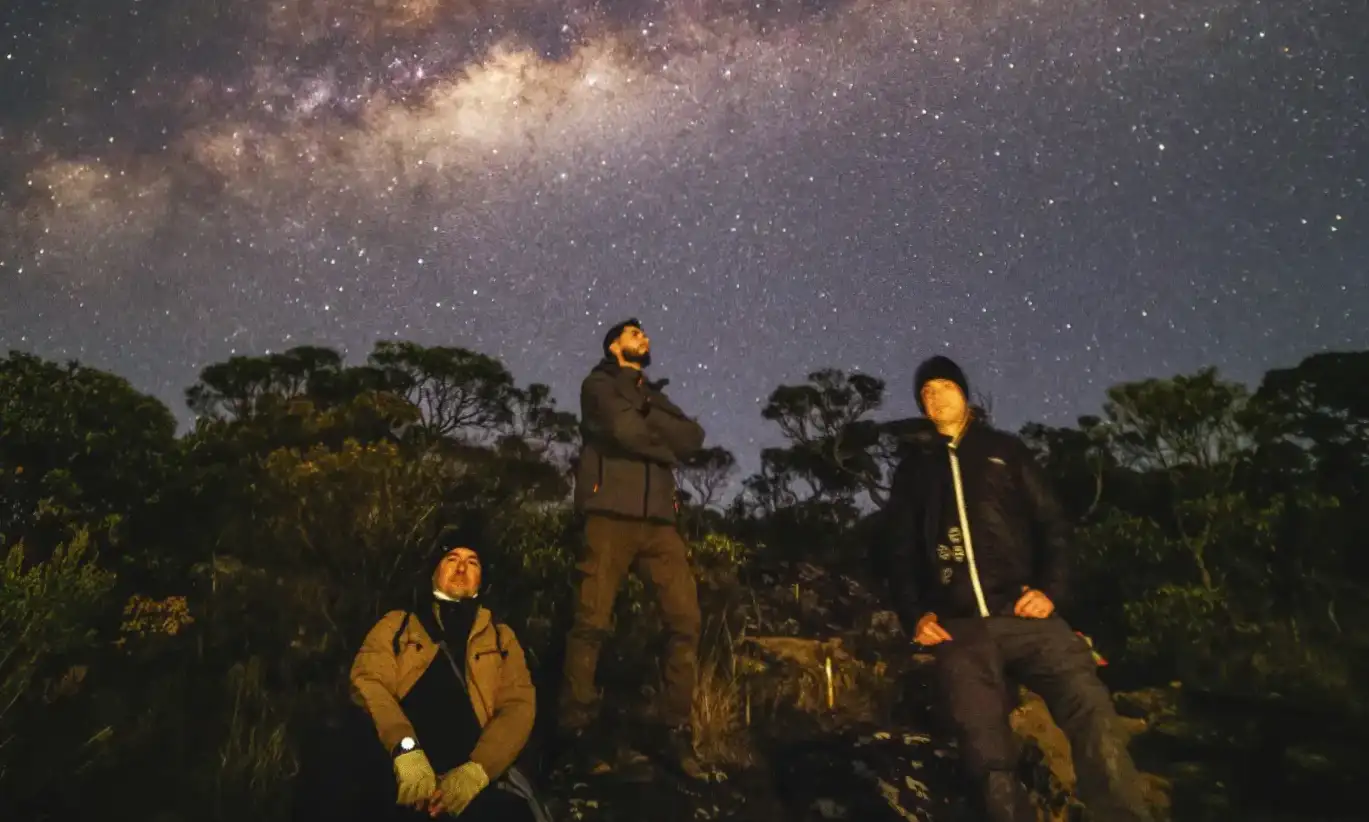
Operators in Santa Maria Madalena sell evening observing programs as complete packages. The Deguste Astronômico tour, for example, runs at a rural lodge near the park from 6 p.m. to 11 p.m. It includes observations with a UFRJ-affiliated astronomer, professional telescopes, transport from the town center, and a traditional Polish dinner featuring pierogi, goulash, and bigos—a legacy of the region’s Polish community.
At the time checked, the price was R$295 per adult, half price for children aged 7–15, and free for children under 7. The date is confirmed on Wednesday of the same week and depends on the forecast. If cloud makes observing impossible, the booking moves to the next suitable seasonal date rather than simply being cancelled.
For customer cancellations, the operator returns the full amount with at least 48 hours’ notice, half with 24–48 hours’ notice, and nothing on the day of the event. Via Láctea Experiências also runs night observations. Ask each operator directly for current prices and conditions because they can change between seasons.
Independent trip or guided program?
Traveling independently costs less and lets you choose any available night. It also comes with practical limits. With only one bus per day, anyone without a car needs at least one night in town. The best observing areas are not always obvious from the road, and an astronomer’s explanation is a significant part of the experience.
Mountain weather is the largest uncertainty. Organized tours usually allow a date change when the sky is cloudy. On an independent trip, a clouded-out night simply means no observation.
If traveling alone, check the forecast and moon phase before departure and reserve accommodation early because the town has limited capacity. If booking an operator, confirm the bad-weather rescheduling policy before paying.
The practical takeaway
April to October is the most reliable season. Choose dates near new moon for the Milky Way and faint deep-sky objects. The drive from Rio takes about four hours; the direct bus takes around seven hours and normally runs once a day. Before paying for a tour, confirm its current price and cloud-cover rescheduling policy. Festival dates and the status of the federal astrotourism bill should be checked closer to the trip because they change independently of the park itself.