An updated guide to Rio de Janeiro’s museums and science spaces: what to choose on a first visit, where to go with children, and where to explore history, astronomy, nature, and contemporary art.
Museum schedules in Rio can change for maintenance, school groups, temporary exhibitions, holidays, and municipal events. Treat the hours and prices below as planning information, then confirm them on the museum website or Instagram account on the day you organize the visit.
Quick choices when time is limited
| If you want | Choose | Why |
|---|---|---|
| Science, architecture, and easy transport | Museu do Amanhã | The clearest first-time choice, beside the VLT and Praça Mauá |
| Art and the city | MAR | Easy to combine with Museu do Amanhã |
| Brazilian history | Museu Histórico Nacional | A major collection; confirm which galleries have reopened |
| Little Africa | IPN and MUHCAB | The best context for Gamboa and Cais do Valongo |
| A family visit | AquaRio, Casa da Ciência, Planetário, or Museu da Vida | More interaction and less museum fatigue |
| An unusual collection | MAST, MUSAL, Museu Light, or Museu Cartográfico | Astronomy, aviation, electricity, and maps |
Plan by neighborhood
Praça Mauá and central Rio: Museu do Amanhã, MAR, Museu Histórico Nacional, Espaço Cultural da Marinha, and Museu Naval. This is the easiest museum route without a car, with VLT service and short walks.
Gamboa and Little Africa: IPN, MUHCAB, Cais do Valongo, and Pedra do Sal. Give the area a dedicated historical route instead of trying to pass through in half an hour.
North Zone and São Cristóvão: MAST, Museu Nacional, BioParque, and Museu da Vida. Transport takes more planning, but this is the strongest science cluster.
Zona Sul and Barra: Casa da Ciência, Planetário, Jardim Botânico, and Museu do Pontal. These work well for a quieter day away from central Rio.
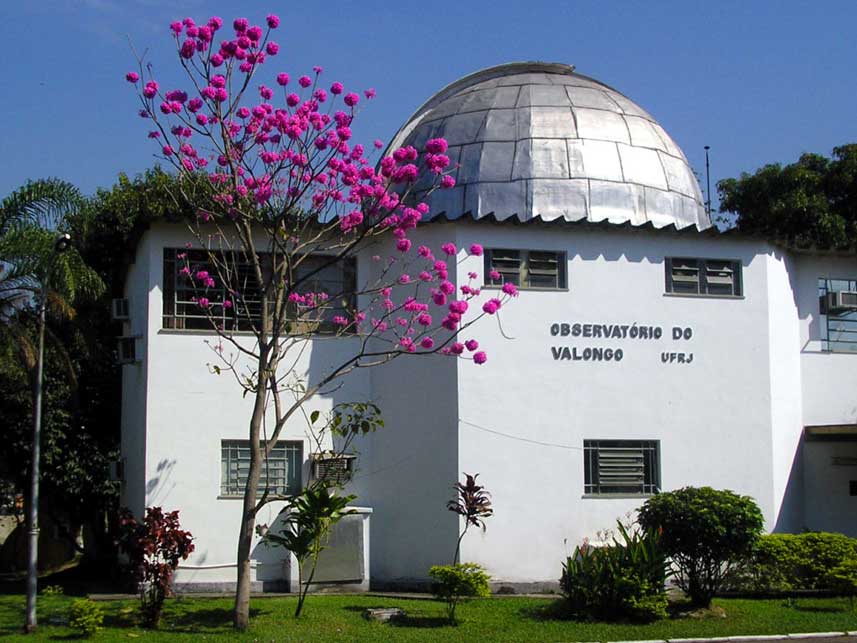
Observatório do Valongo
Astronomy on Morro da Conceição
UFRJ’s historic observatory is a university space rather than a mass attraction. It combines the history of astronomy, scientific instruments, and an unusual view over the port district. Check events and visitor access against the academic calendar. Official website
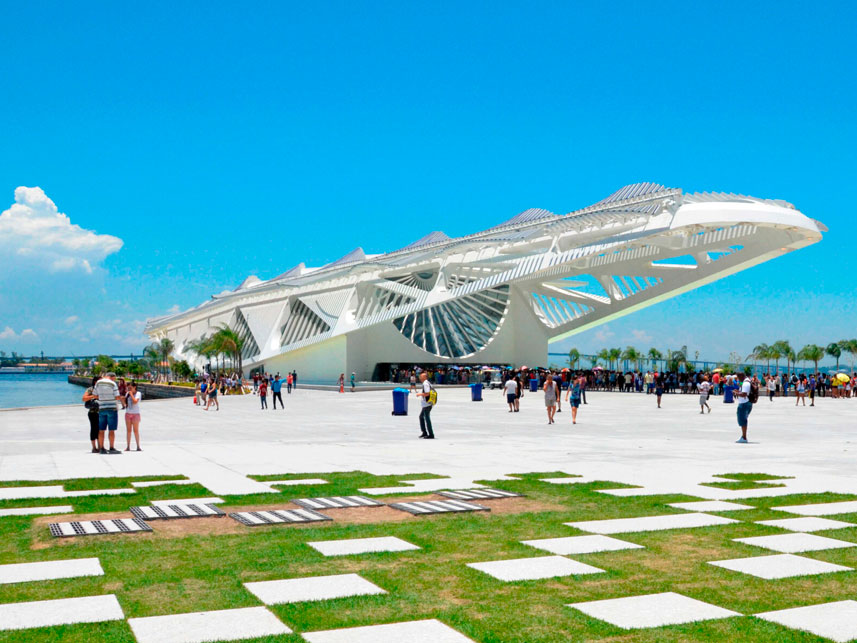
Museu do Amanhã
Rio’s most visitor-friendly science museum
The Museum of Tomorrow on Praça Mauá combines science, ecology, technology, and possible futures. It is an easy starting point for a museum day, beside MAR, the port promenade, the VLT, and Guanabara Bay.
Practical: the 2026 visitor page lists full admission at R$40 and reduced admission at R$20, with a R$10 promotion on the tenth day of each month. Advance tickets are recommended. Official website
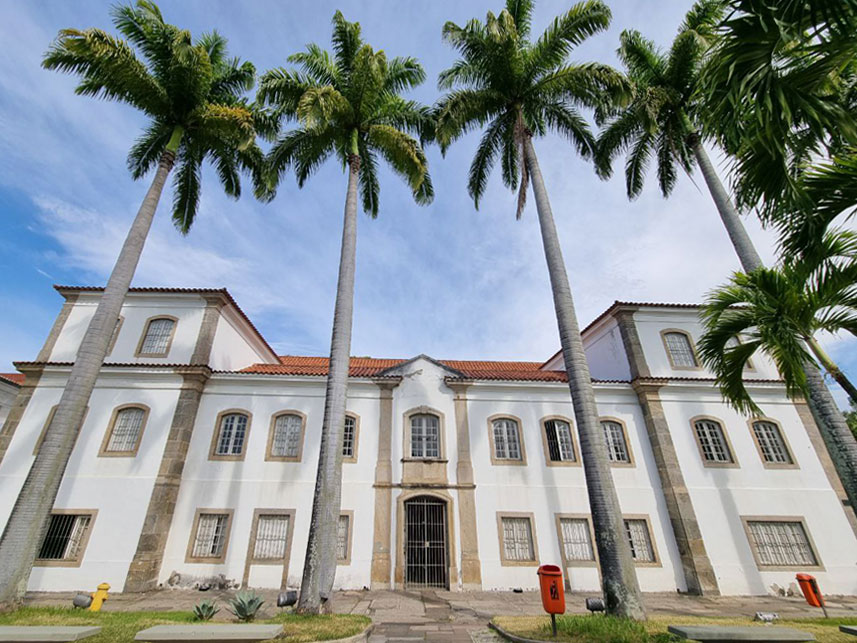
Museu Histórico Nacional
Brazilian history in central Rio
The National Historical Museum covers colonial Brazil, the empire, the republic, coins, documents, and temporary exhibitions. Opening arrangements have changed during renovation.
Practical: at the time of this update, the official site listed partial opening Wednesday–Sunday, 10 a.m.–6 p.m., with last entry at 5 p.m. Confirm which galleries are available. Official website
Museu de Arte do Rio — MAR
Art and urban history at Praça Mauá
MAR pairs naturally with Museu do Amanhã. One focuses on future scenarios and science; the other explores Rio, social history, and contemporary art.
Practical: in 2026, MAR is closed on Wednesdays. Exhibitions are open 11 a.m.–6 p.m., with last entry at 5 p.m. Full admission is R$20 and Tuesdays are free. Official website
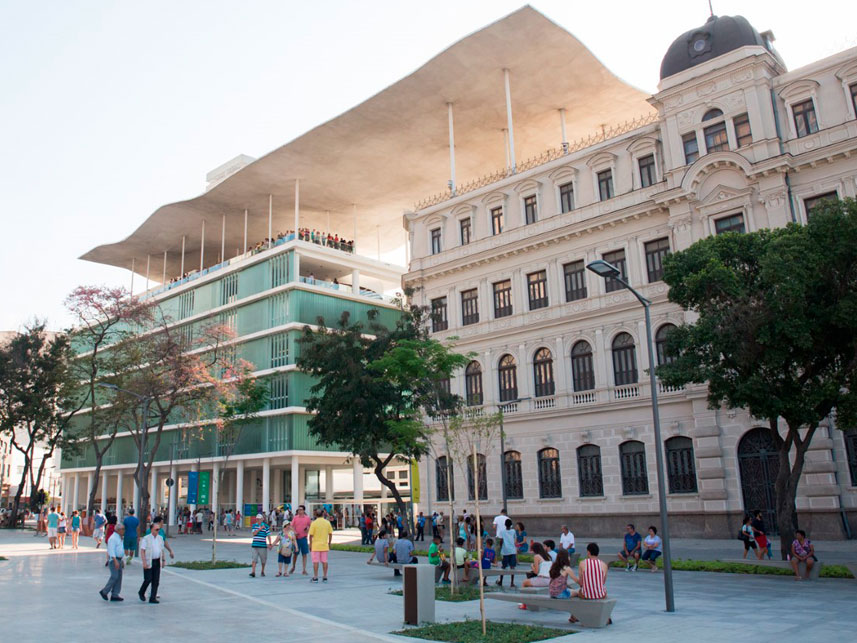
Instituto Pretos Novos — IPN
A place of memory in Little Africa
IPN is a small but essential site in Gamboa, connected to the archaeological remains of Cemitério dos Pretos Novos and the arrival of enslaved Africans in Rio. It is a memorial site rather than a light one-hour museum.
Practical: the official site lists Tuesday–Friday, 10 a.m.–4 p.m., and Saturday, 10 a.m.–1 p.m. Confirm arrangements for guided Little Africa routes. Official website
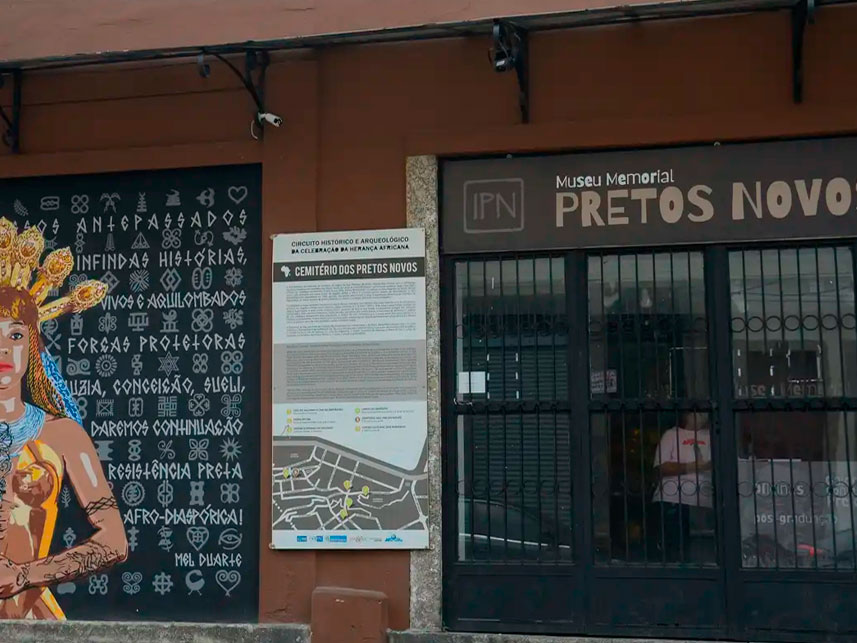
MUHCAB
Museum of Afro-Brazilian History and Culture
Combine MUHCAB with IPN, Pedra do Sal, Cais do Valongo, and the wider Little Africa district. The museum provides context, while the neighborhood becomes more meaningful with preparation or a knowledgeable guide. Check schedules through the museum and Prefeitura do Rio channels. Rio city portal
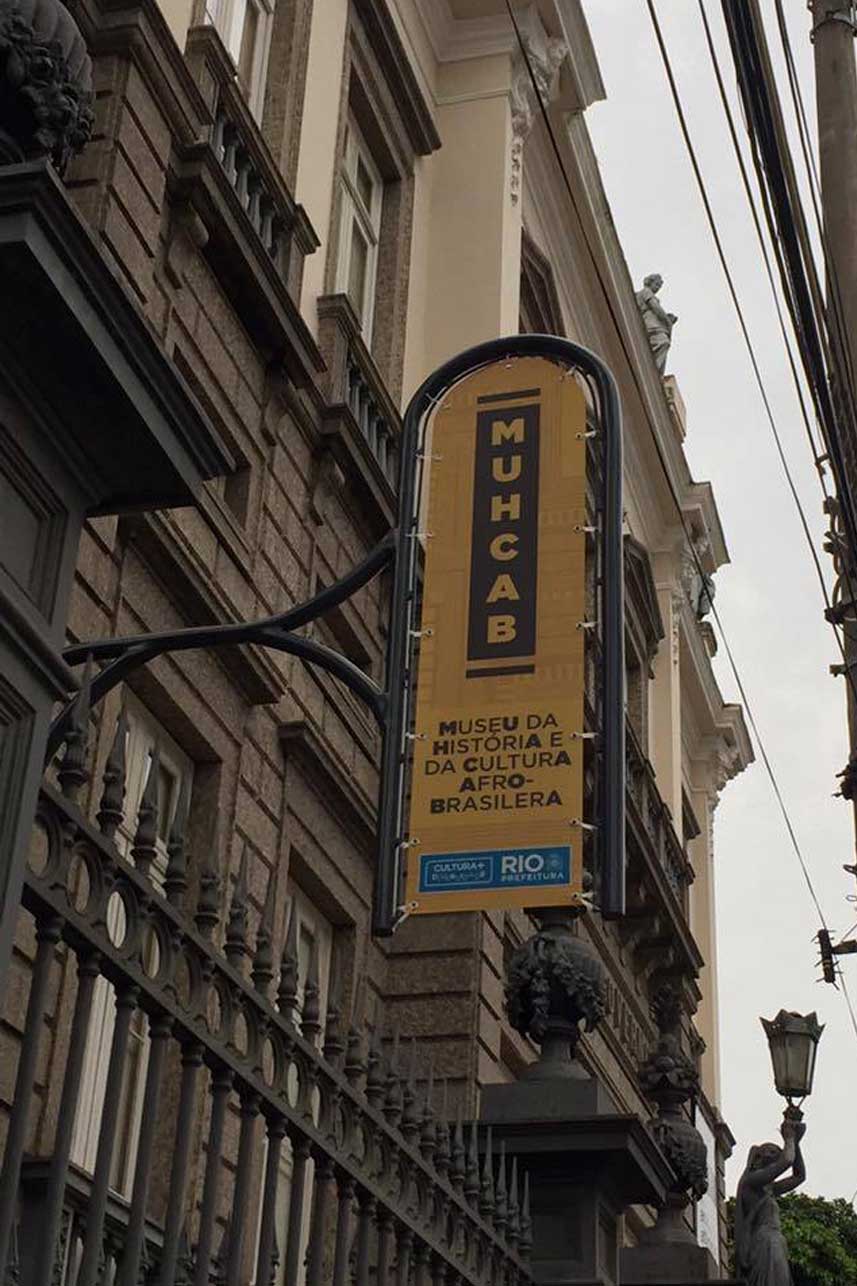
Espaço Cultural da Marinha and Museu Naval
Naval history near Praça XV
These two sites fit easily into a historic-center route. Espaço Cultural da Marinha is often the departure point for Ilha Fiscal visits, while Museu Naval covers ships, documents, artillery, and Brazilian naval history. Confirm the schedule and Ilha Fiscal access before visiting. Official website
Museu Inaldo de Lyra Neves
Medicine, surgery, and professional history
This small museum at the National Academy of Medicine holds surgical instruments and material connected to Brazilian medical history. It is not a regular tourist attraction, so arrange or confirm access in advance. Official website
Museu Light da Energia
Electricity, infrastructure, and interactive learning
Museu Light explains how electricity reaches a city, how energy conservation works, and why infrastructure becomes visible only when it fails.
Practical: admission is free and visits are linked to advance booking. The 2026 page noted that scheduling would open soon, so confirm the format before traveling. Official website
Museu Cartográfico
Maps, territory, and military geography
A niche collection for visitors interested in historic maps and changing ideas of Brazilian territory. Departmental museums may operate by appointment or with restricted access. Official website
AquaRio
The aquarium at Porto Maravilha
AquaRio is not strictly a museum, but it is one of Rio’s easiest family science attractions and combines well with Boulevard Olímpico, Museu do Amanhã, and the Yup Star observation wheel.
Practical: the official OneRio ticket partner listed adult admission at R$163 and reduced admission at R$33 in 2026. Hours were 9 a.m.–5 p.m. on weekdays and 9 a.m.–6 p.m. on weekends and holidays. Official ticket page
Casa da Ciência da UFRJ
Accessible science in Botafogo
Casa da Ciência is a changing UFRJ program of exhibitions, games, workshops, and temporary projects rather than a traditional permanent collection. Admission is free; hours follow the current exhibition, and groups larger than eight should book. Official website
Planetário do Rio
Astronomy in Gávea
The planetarium is an easy choice for families and anyone who wants astronomy without leaving the city. Programs change, so check the current sessions rather than relying only on building hours. Address: Rua Vice-Governador Rubens Berardo, 100, Gávea. Rio city information
Jardim Botânico do Rio de Janeiro
Science, nature, and one of Rio’s calmest walks
The Botanical Garden is a research institute and plant collection as well as a beautiful place to walk among palms, orchids, and Atlantic Forest species.
Practical: the 2026 gov.br page lists the Arboretum Thursday–Tuesday, 8 a.m.–5 p.m., and Wednesday, 11 a.m.–5 p.m. The garden museum is open Thursday–Tuesday, 10 a.m.–6 p.m., and closed Wednesday. Official website
Museu de Ciências da Terra
Geology, minerals, and paleontology
The Earth Sciences Museum is a specialized but strong stop for fossils, minerals, and the history of geological research. Use the SGB/CPRM portal or the museum’s current official channel when planning. Official portal
Futuros — Arte e Tecnologia / Musehum
The institution formerly known as Oi Futuro
The current names are Futuros — Arte e Tecnologia and Musehum. The space covers art, technology, communications, and the humanities. The name and institutional structure changed in 2023, so use Instituto Futuros for current programs. Official website
Espaço Ciência Viva
Interactive science in Tijuca
One of Rio’s earliest interactive science museums, Espaço Ciência Viva focuses on experiments and educational activities for children and school groups. Independent visitors should look for the next Sábado da Ciência in the program. Official website
Museu da Vida Fiocruz
Health, biomedicine, and the Manguinhos campus
Museu da Vida is Fiocruz’s major public-science complex, combining medical history, biomedical science, parkland, a butterfly garden, and the architecture of the Manguinhos campus. Admission is usually free, but confirm individual spaces and activities. Official website
MAST — Museu de Astronomia e Ciências Afins
Scientific instruments and observing the sky
MAST is one of Rio’s best destinations for astronomy, historic instruments, and an old scientific campus. MuseusBr lists it as open with free admission: Tuesday–Friday, 9 a.m.–4:30 p.m.; Saturday and holidays, 2–5:30 p.m. Check observing programs separately. Official listing
Museu Nacional
Brazil’s most important scientific symbol—check access carefully
UFRJ’s National Museum remains a defining Brazilian scientific institution, but after the 2018 fire its status is more complicated than that of other museums. A partial reopening was expected in 2026. Until restoration is complete, treat it as a reconstruction site with selected programs and events, and confirm access before traveling. Official website
BioParque do Rio
Wildlife, conservation, and Quinta da Boa Vista
BioParque is the modern version of Rio’s city zoo, with greater emphasis on animal welfare, education, and species conservation. Combine it with Quinta da Boa Vista and São Cristóvão. Ticket prices and promotions change, so use the official sales page. Official website
Museu Aeroespacial — MUSAL
Aviation at Campo dos Afonsos
MUSAL is Rio’s strongest aviation collection, with aircraft, Air Force history, and large hangars at a site central to Brazilian aviation. It is harder to reach than downtown museums but offers a rare format.
Practical: the official page lists free admission Tuesday–Sunday, entry from 9 a.m., gate closure at 3:30 p.m., and museum closure at 4 p.m. Official website
Museu do Pontal
Brazilian folk art in Barra da Tijuca
Museu do Pontal presents Brazil through folk art, craft, religion, work, and everyday life rather than imperial portraiture or beach imagery. It is far from central Rio, so include it in a Barra day. Admission is often free, but reserve through the museum website when required. Official website
How to use this guide
Do not try to cover every museum in one trip. Rio works best in neighborhood clusters: Praça Mauá and central Rio, Little Africa, São Cristóvão and Manguinhos, or a separate day in Barra. You will spend less time in traffic and understand each place in context.
For a first museum day with simple transport, start with Museu do Amanhã and MAR, then add either Museu Histórico Nacional or a Little Africa route. With children, look first at AquaRio, Planetário, Casa da Ciência, and Museu da Vida. Most importantly, confirm the official website before leaving: in Rio, that is a normal part of museum planning.