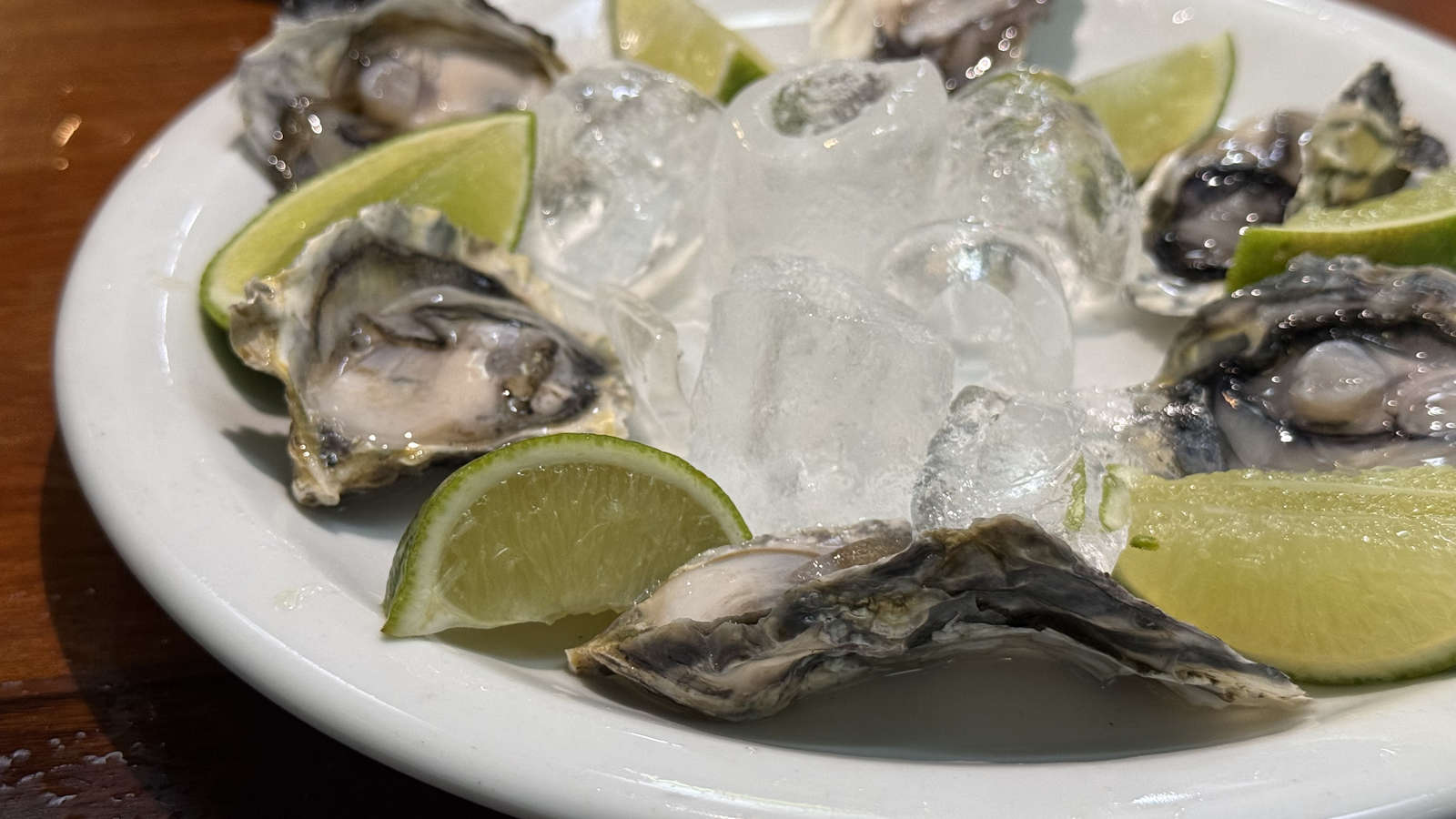
Oysters in Rio de Janeiro do not have to mean white tablecloths, a glass of sparkling wine, and a restaurant bill that makes you rethink your travel budget. You can also find them in an ordinary boteco: a neighborhood bar where people sit at the counter or at folding tables on the sidewalk and wash down their seafood with cold beer.
We tried three places with fresh oysters on their regular menus: Adega Pérola in Copacabana, Labuta in central Rio, and Britânia in Tijuca. We visited all three on September 12, 2026, ordered their standard fresh oysters, and compared price, size, flavor, presentation, and the overall experience.
The result surprised us: the cheapest oysters were also the biggest, plumpest, and fullest in flavor.
| Venue | Neighborhood | Price on our visit | Our verdict |
|---|---|---|---|
| Britânia Rio-Lanches | Tijuca | R$8 each | Our favorite oysters, with straightforward pricing |
| Labuta Bar | Centro | R$34 for 3 + 12% service | Decent oysters, but the highest price per oyster |
| Adega Pérola | Copacabana | R$52 for 6 + 10% service | A great bar, though oysters are not its main draw |
Third place — Adega Pérola: a great bar, but go for more than oysters
Price: R$52 for 6 oysters + 10% service. Total: R$57.20, or about R$9.53 per oyster.
Maps: Google Maps · Apple Maps
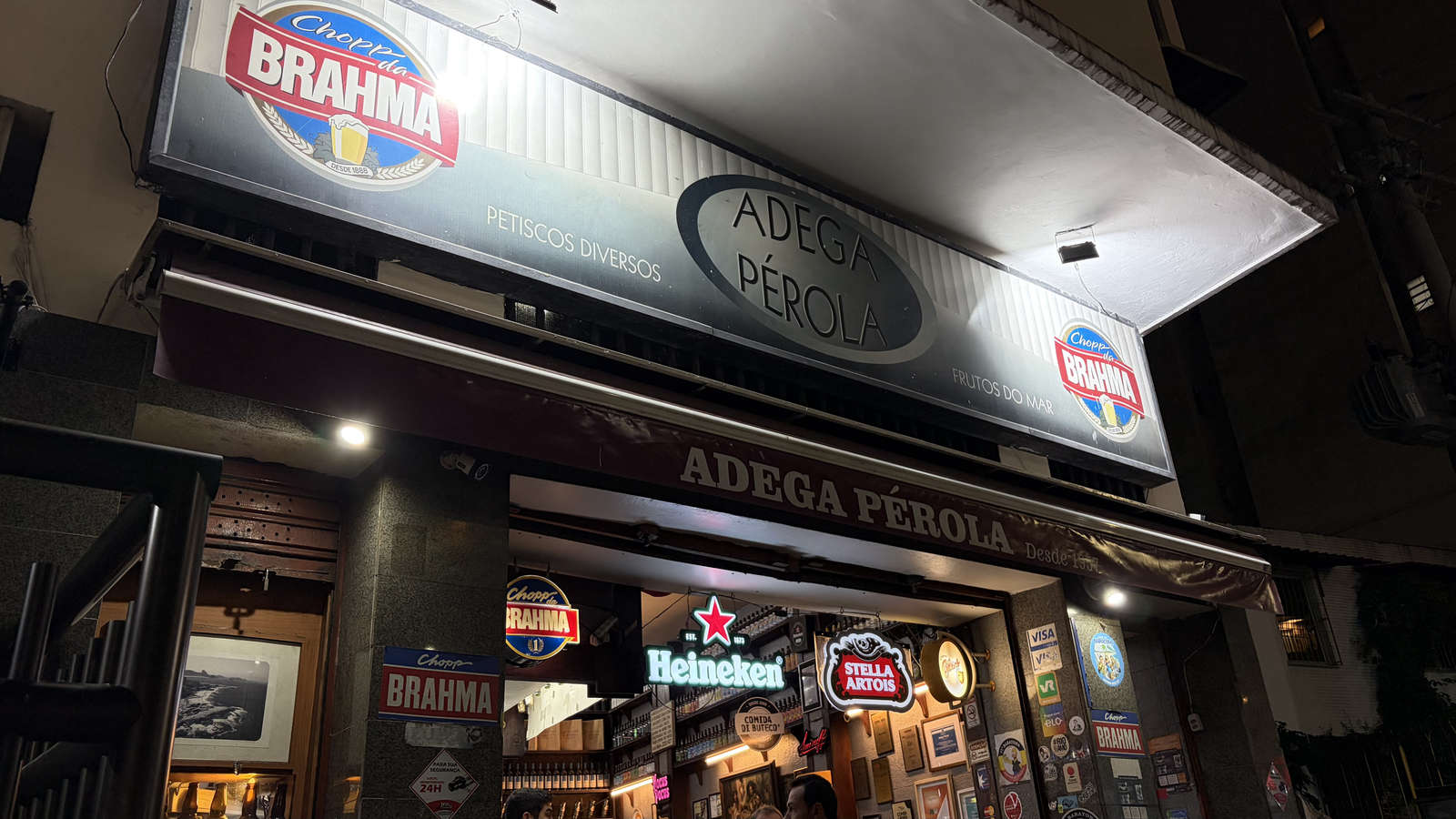
Adega Pérola is a logical place to start because it is the easiest option for most visitors. It is in Copacabana, near Siqueira Campos metro station, so getting there does not take much planning.
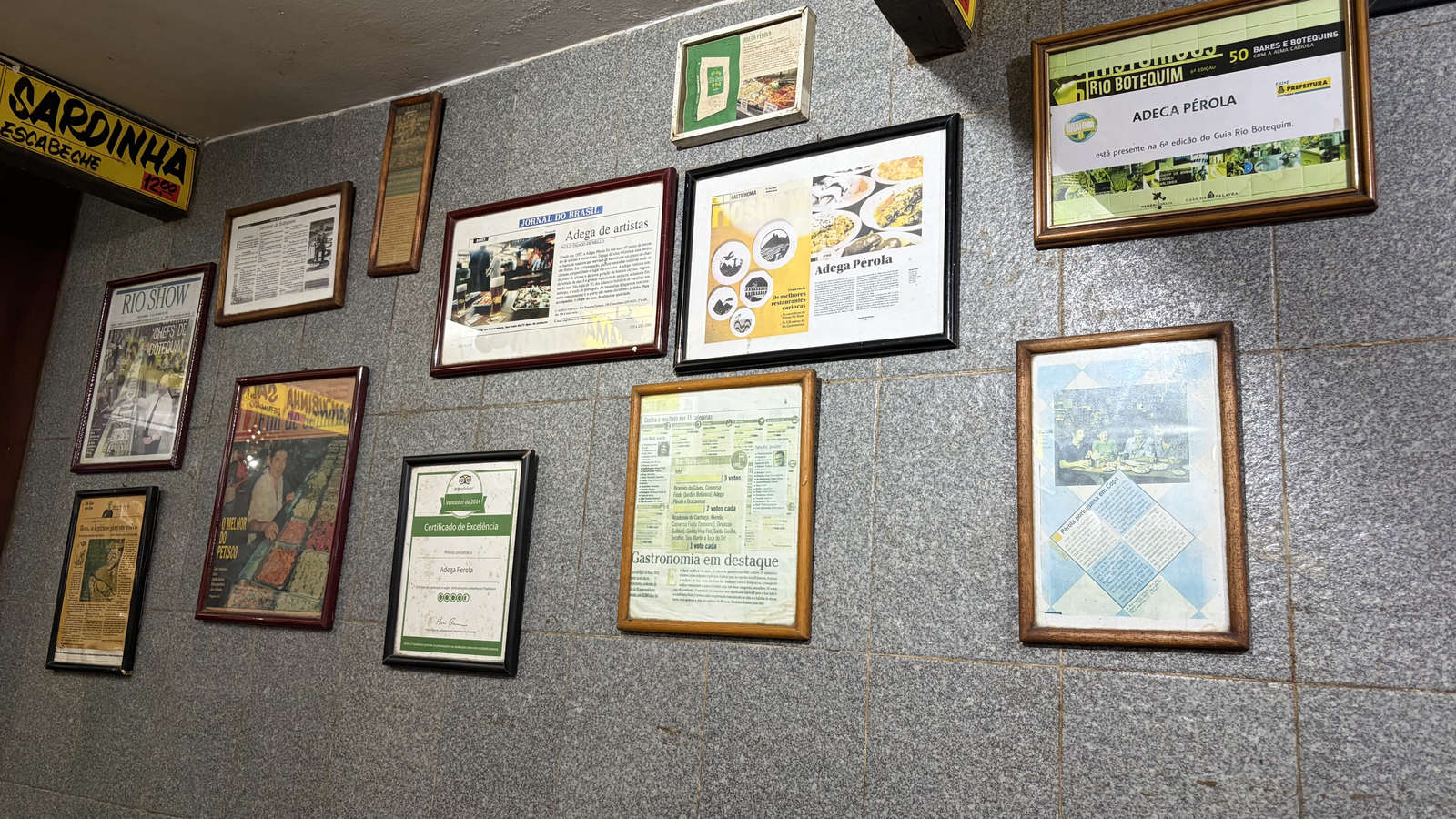
The bar itself is absolutely worth a visit. Open since 1957, Adega Pérola was founded by immigrants from the Portuguese island of Madeira and went on to become one of Copacabana's classic botecos. It is now recognized as Patrimônio Cultural Carioca, part of the city's cultural heritage, and in 2026 Veja Rio once again named it Rio's best traditional bar.
The main attraction is not any single dish but the long glass display counter. It holds dozens of small bites: sardines, rollmops, octopus, mussels, pickled vegetables, eggs, and seafood. There are hints of a Portuguese tasca and a Spanish tapas bar, but the overall feel is unmistakably Rio.
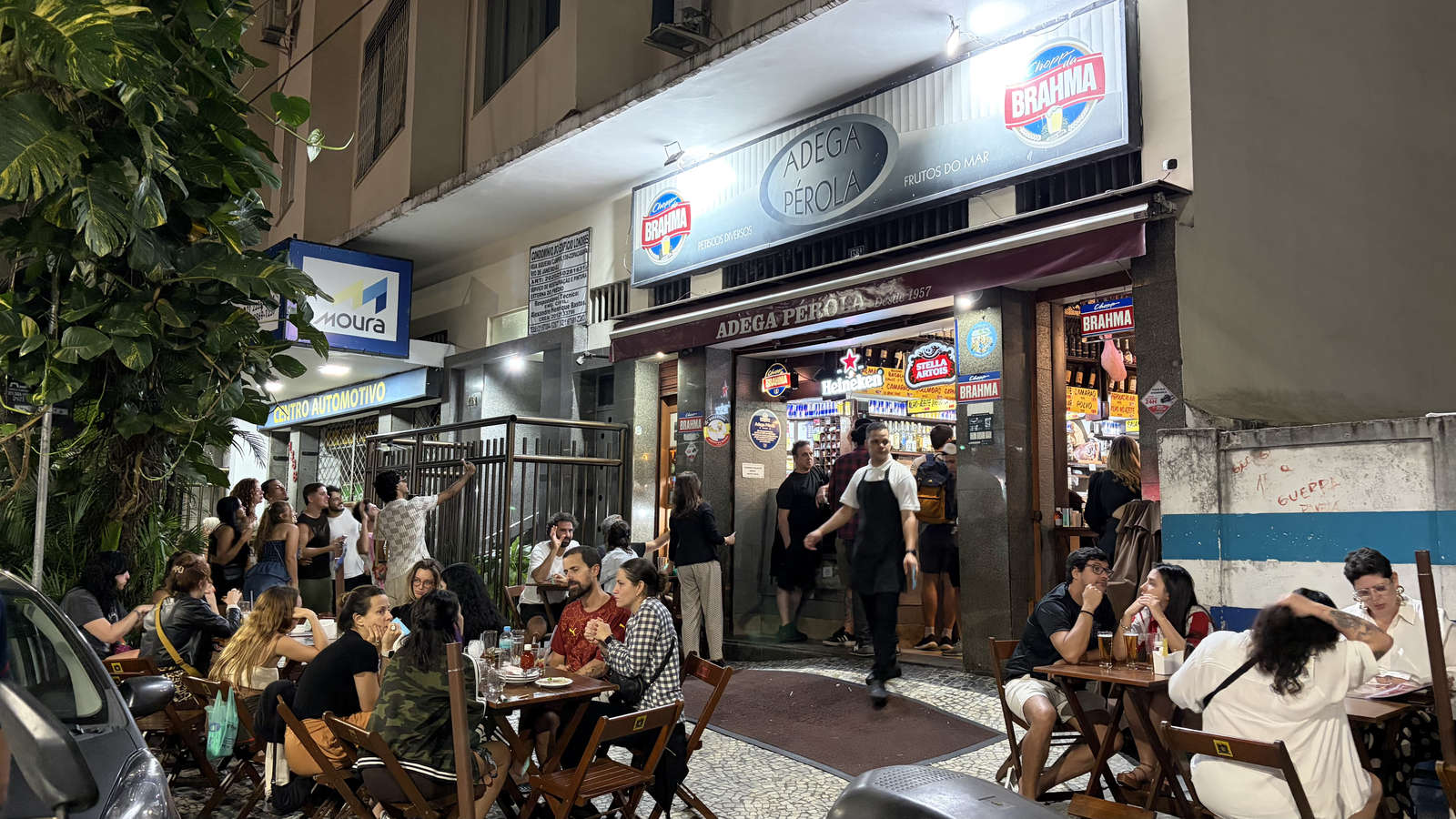
Of the three places we tried, this was the only one serving chope, or draft beer. Britânia and Labuta serve bottled beer. Adega also had the best service of the three: quick, relaxed, and friendly. You can sit at an indoor table, at the counter, or outside and wait for a server; there is no need to track someone down to order.
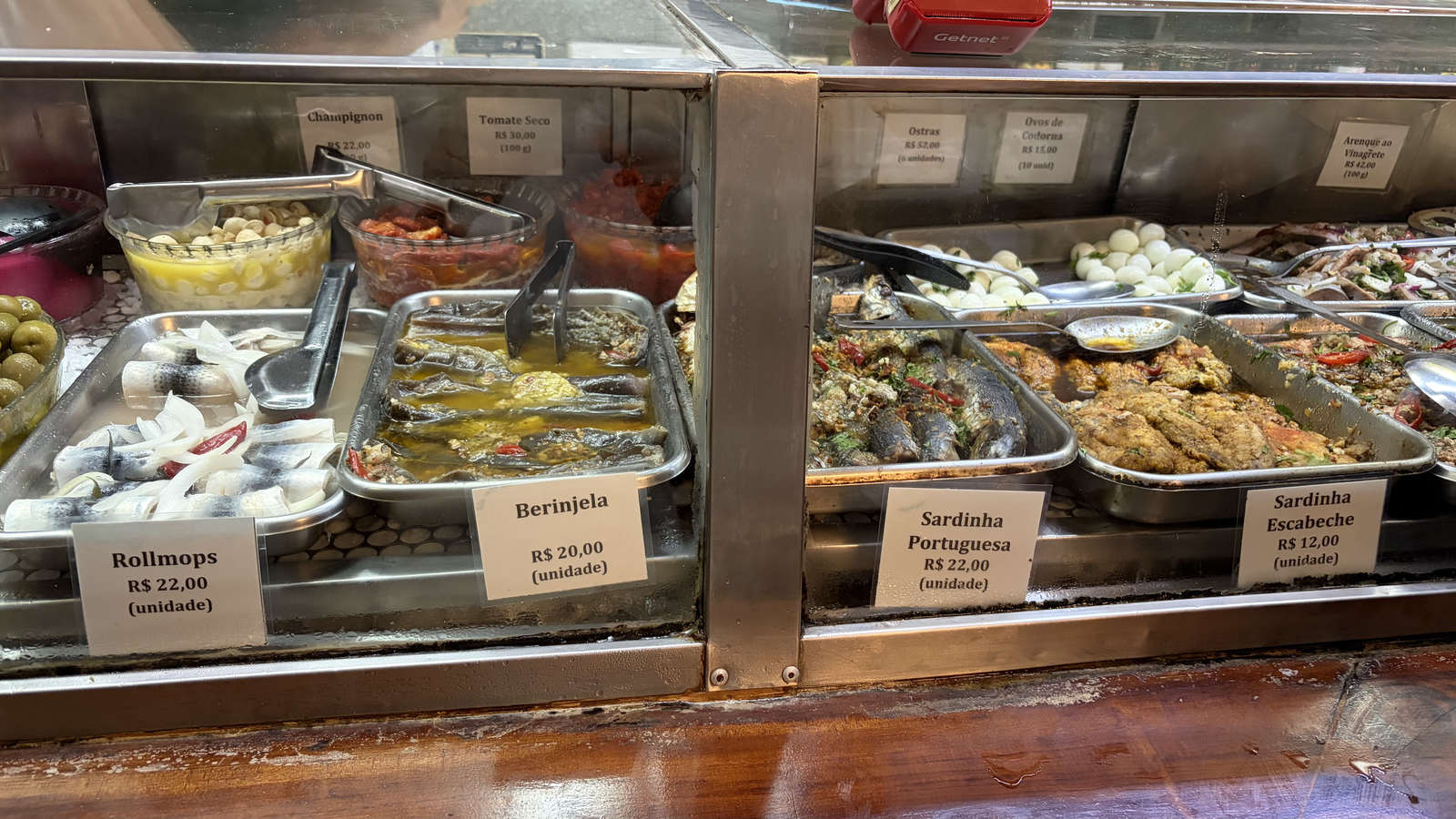
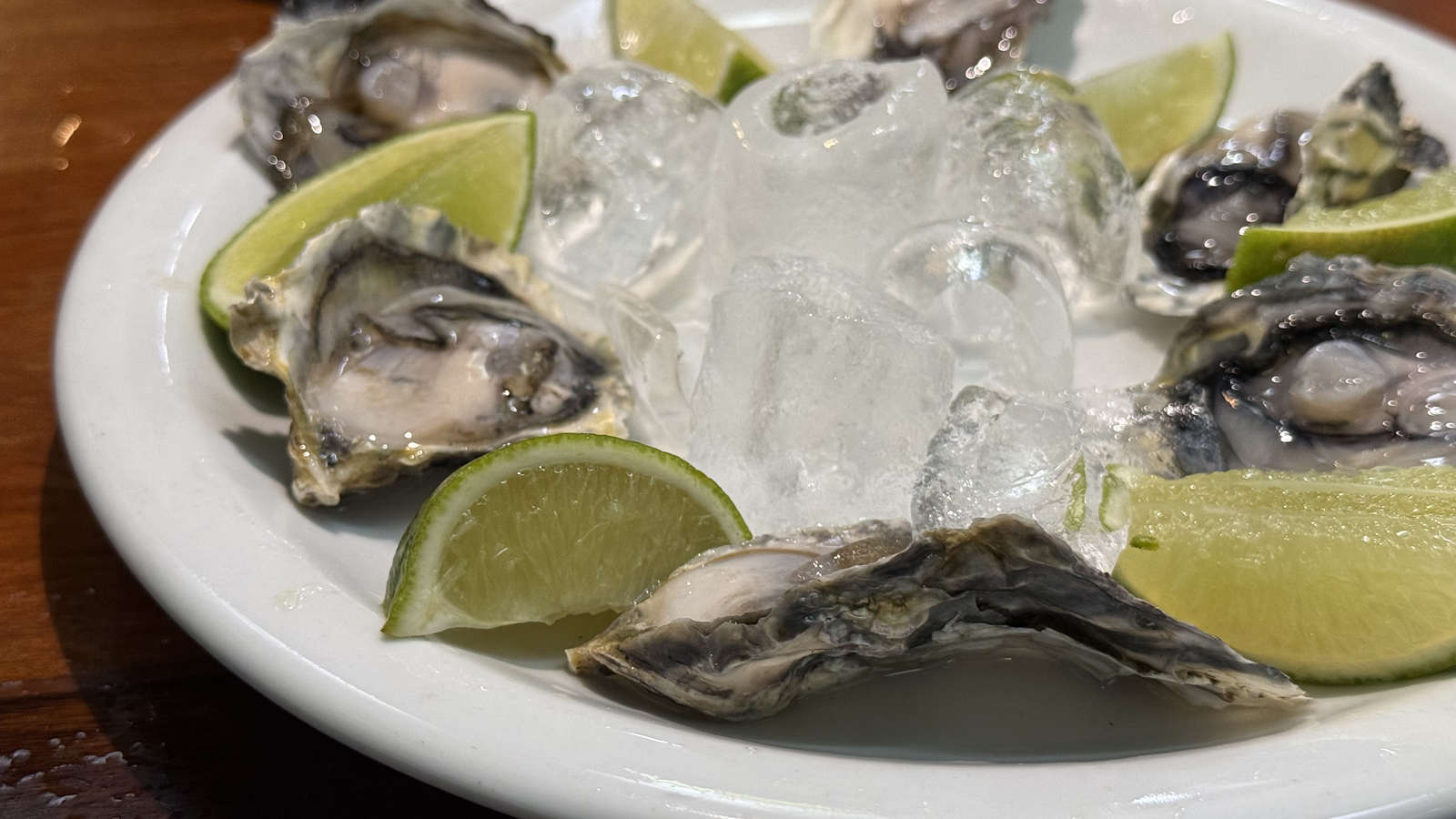
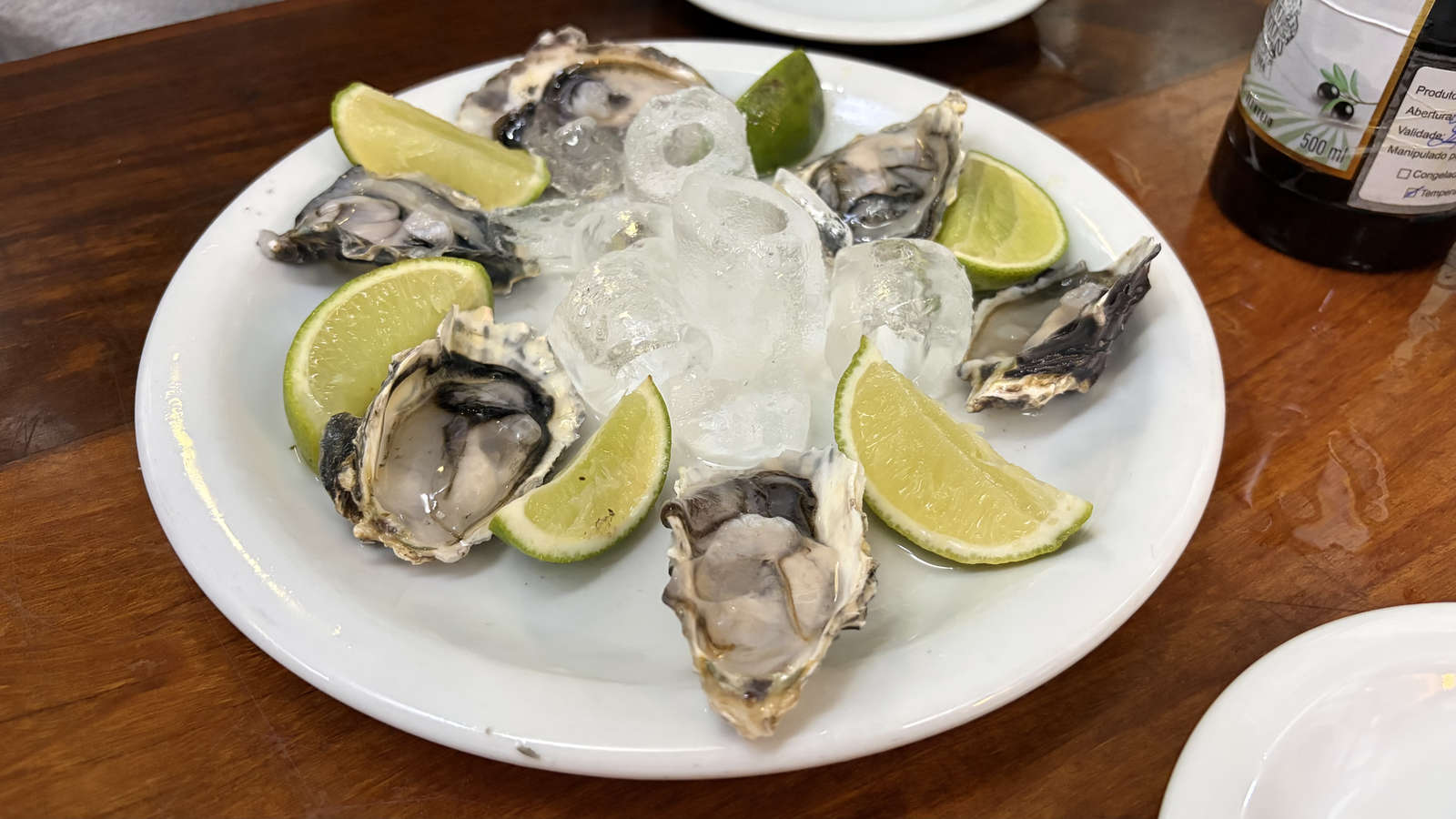
Now for the bad news: the oysters were the weakest part of the visit. Six arrived on a large plate of ice with lime. The presentation looked good, but the oysters themselves were small, with little flesh inside the shells and barely any distinct flavor. The texture was too slippery, and there was almost none of the concentrated brininess that makes a fresh oyster interesting.
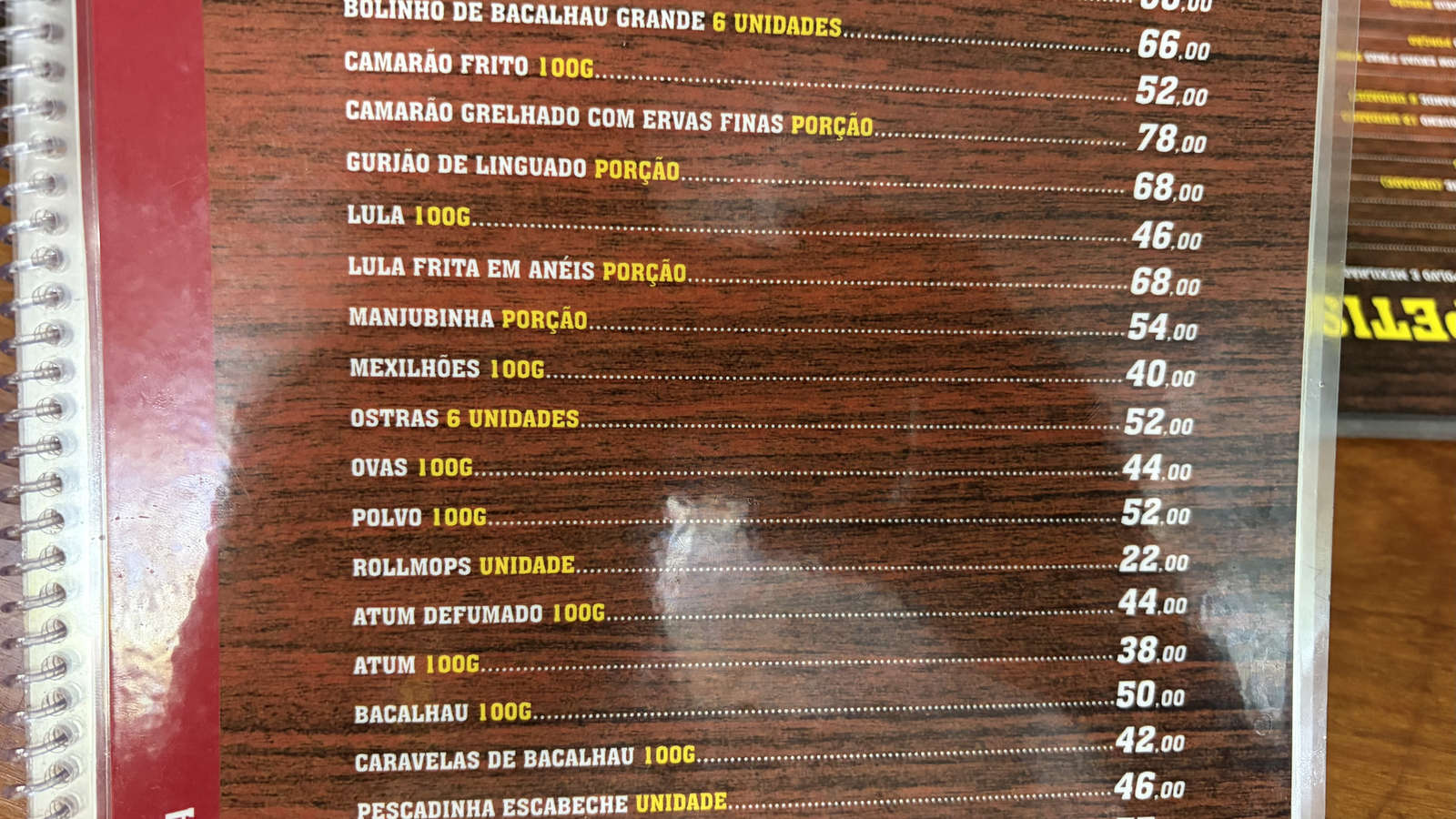
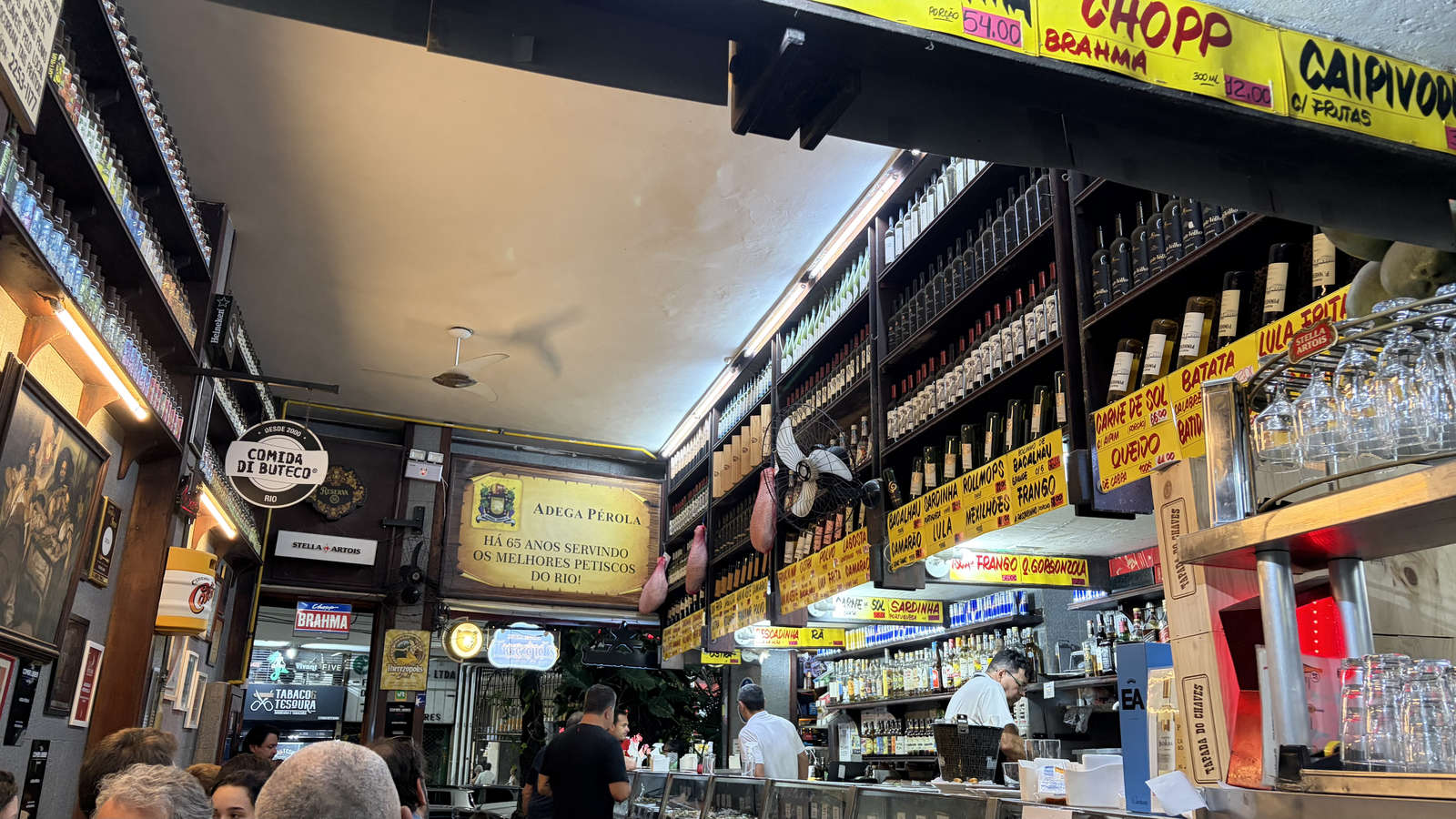
This is a judgment of one batch on one day. Oysters are a live product, and their size, plumpness, and flavor can vary. But on September 12, Adega Pérola came last out of the three specifically for its oysters.
We would still wholeheartedly recommend Adega itself. Come for the bar, the atmosphere, and the huge choice of seafood and traditional small plates, rather than making a special trip for oysters.
Our verdict: Adega Pérola, yes. Oysters at Adega Pérola, optional.
Second place — Labuta Bar: a boteco with a hipster edge
Price: R$34 for 3 oysters + 12% service. Total: R$38.08, or about R$12.69 each.
Maps: Google Maps · Apple Maps
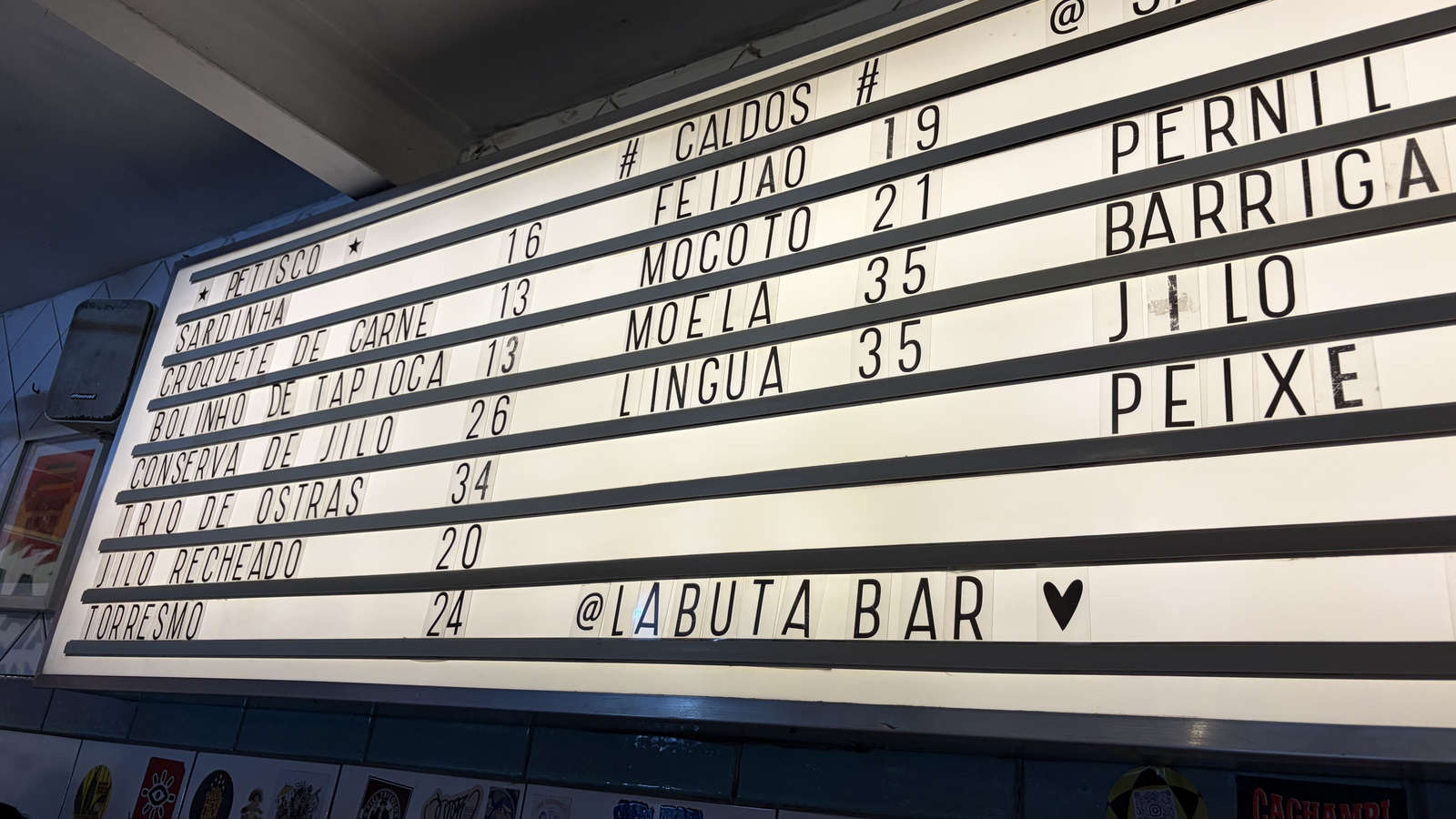
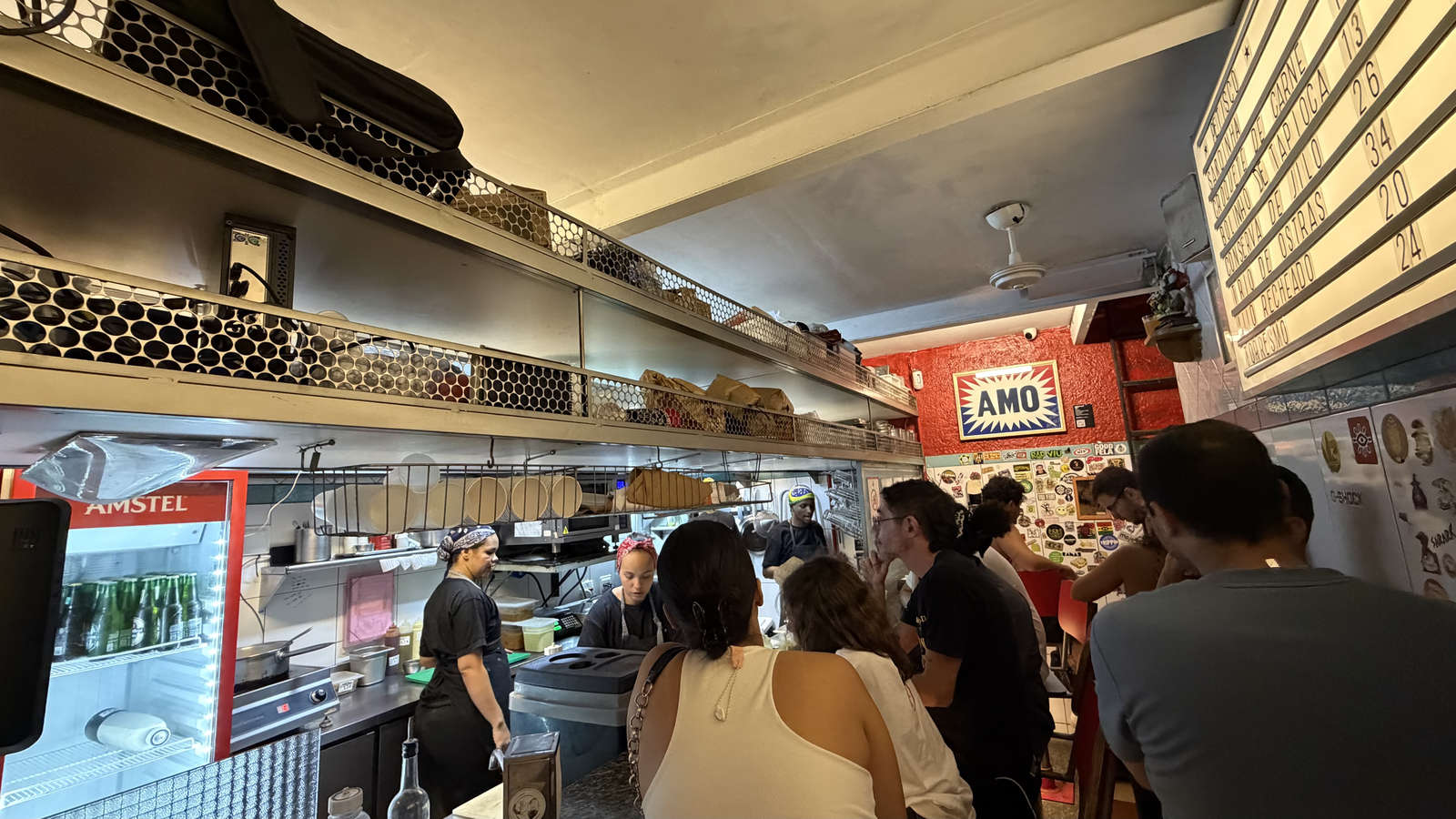
Labuta is a very different kind of place. It opened in 2020 and belongs to a new generation of Rio botecos: everyday food, a tiny space, an open kitchen, simple finishes, sticker-covered walls, an illuminated menu board, and a crowd that gradually spills out onto the street.
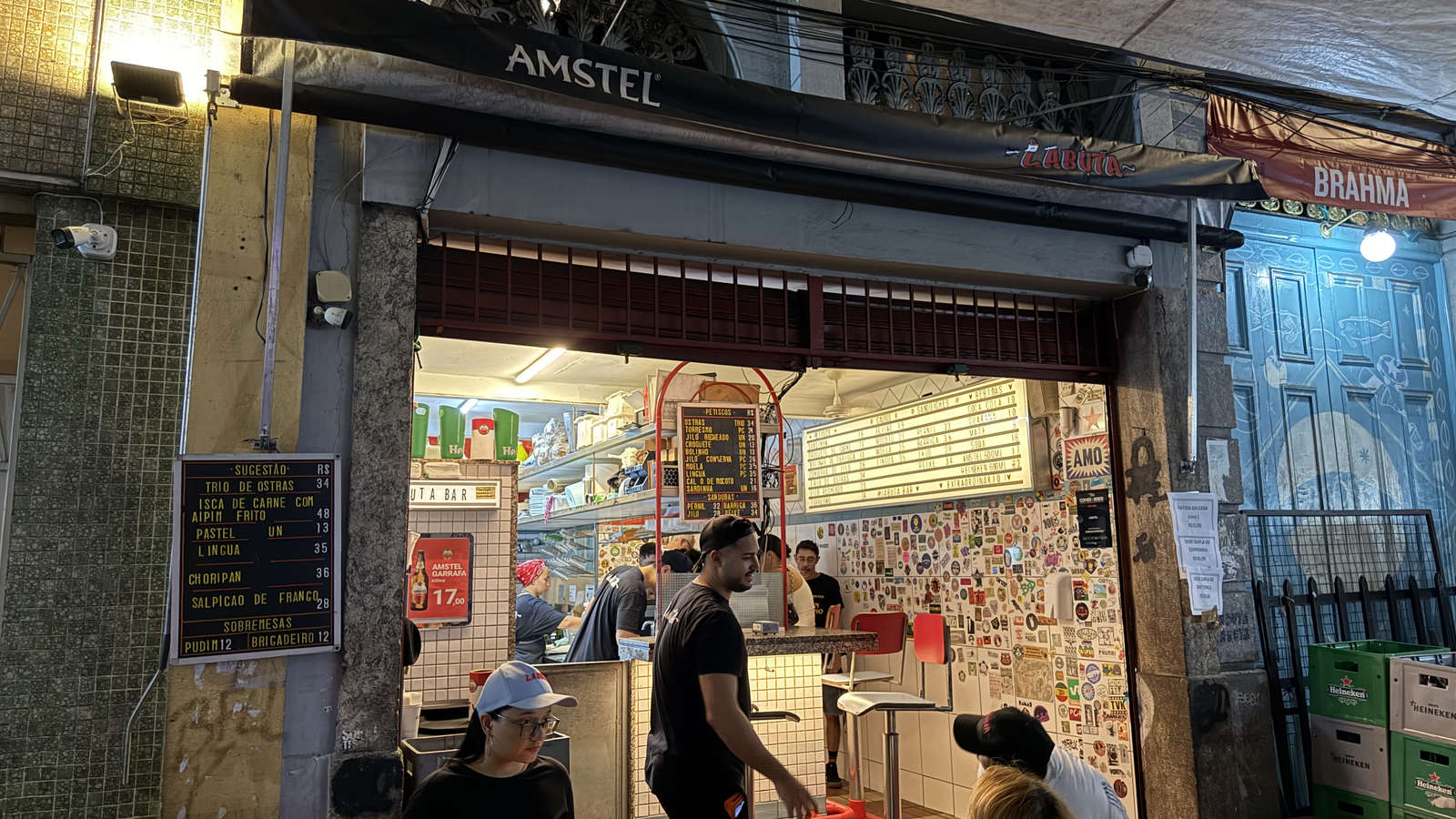
For an international visitor, there is much less culture shock here than at Britânia. It feels young and a little hipster, the sort of place you could just as easily find in Berlin, Lisbon, or Moscow.
It is very compact, though. There are seats at the counter inside, but most of the table seating is outside. At busy times, expect close quarters, conversations all around you, and Rio's usual volume level.
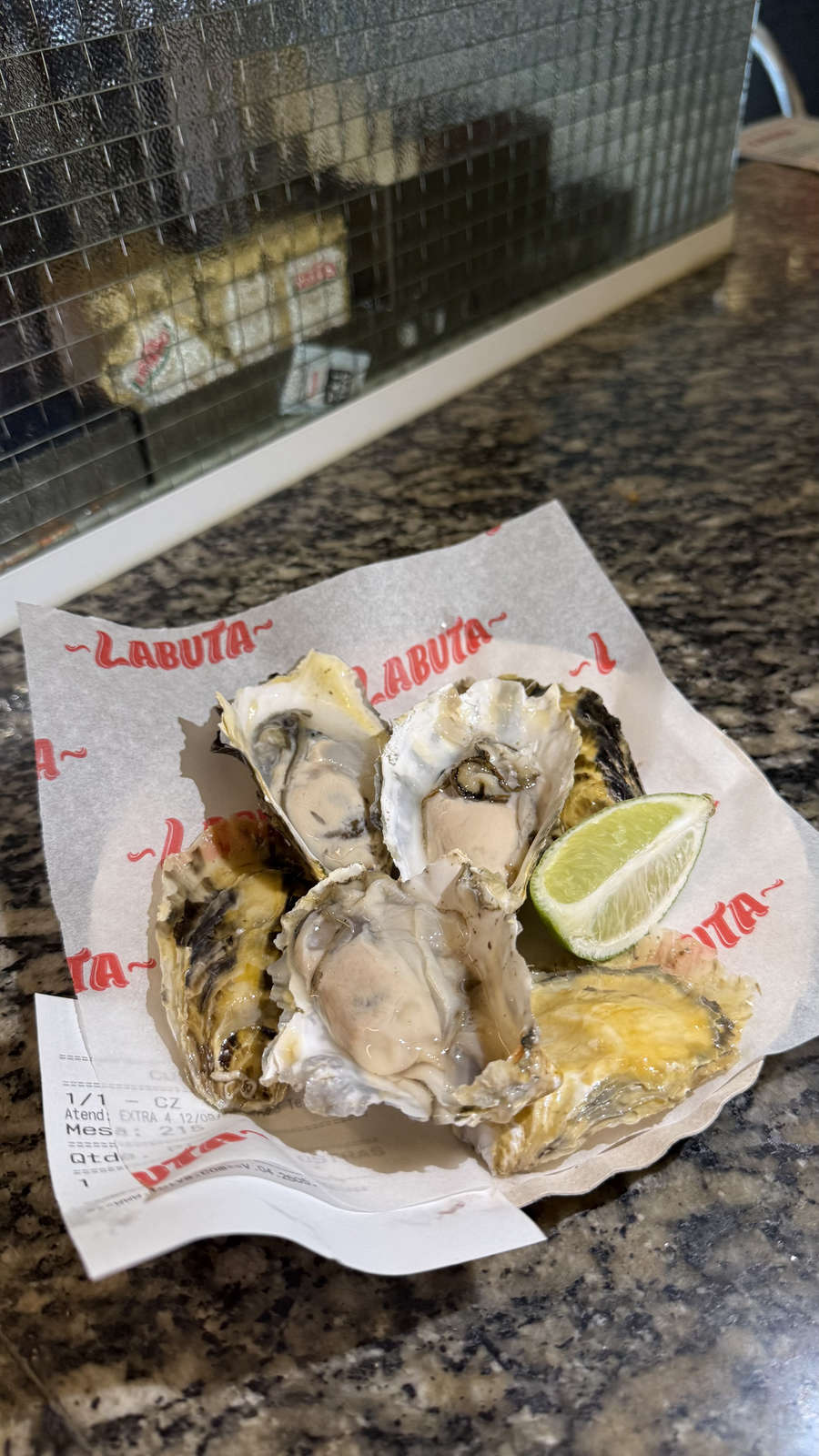
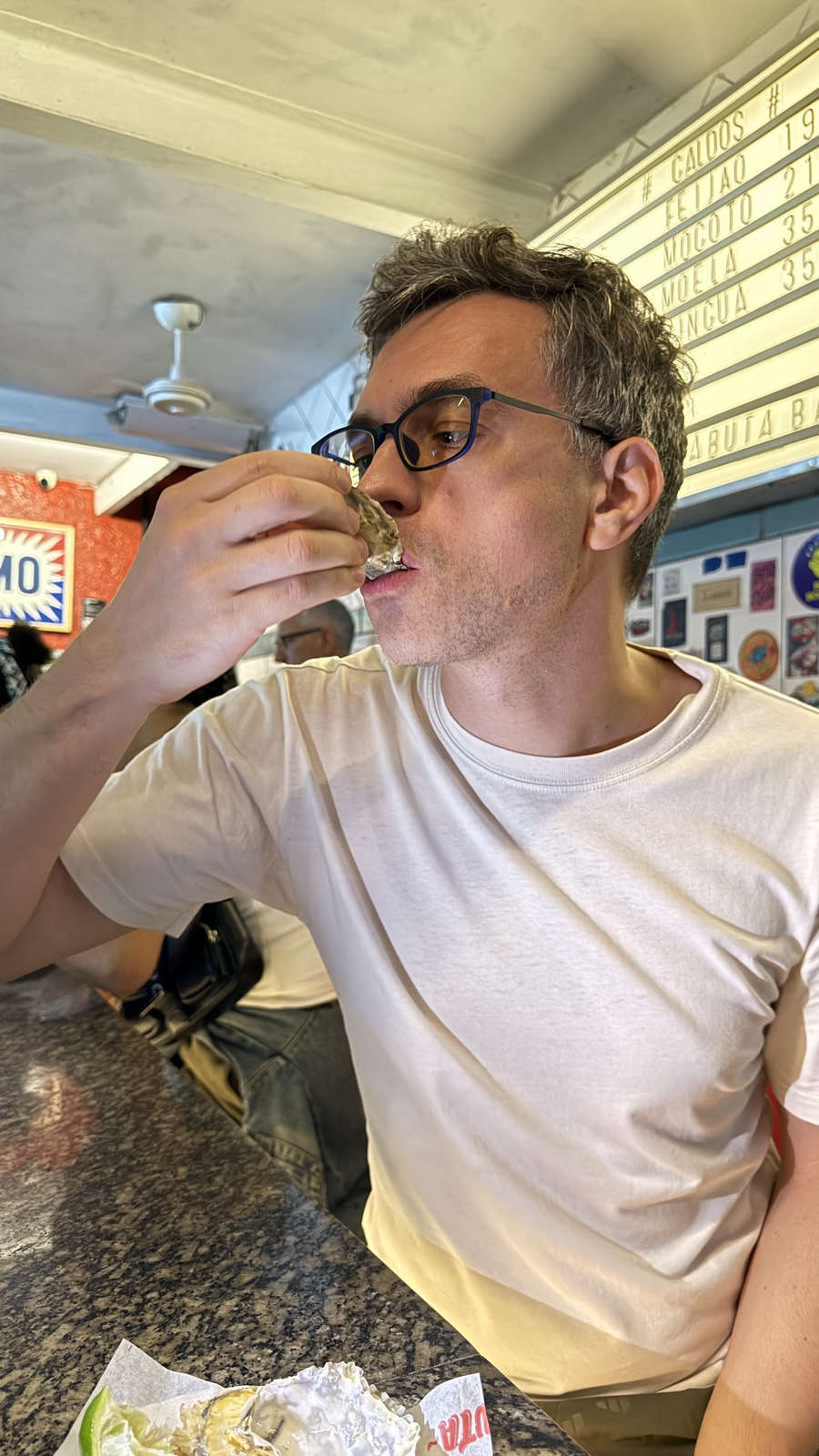
The service deserves a separate mention. It was the weakest of the three venues. You may wait a long time for someone to come over, so it is easier to find a member of staff and place your order. Once we had ordered, though, the food arrived fairly quickly.
Oysters are sold only in sets of three, with lime. In size and appearance, they looked similar to Adega Pérola's, but the flesh was a little plumper and the flavor more noticeable. These were not the kind of oysters that make you immediately order another dozen, but they were a decent option, especially if you were already at Labuta.
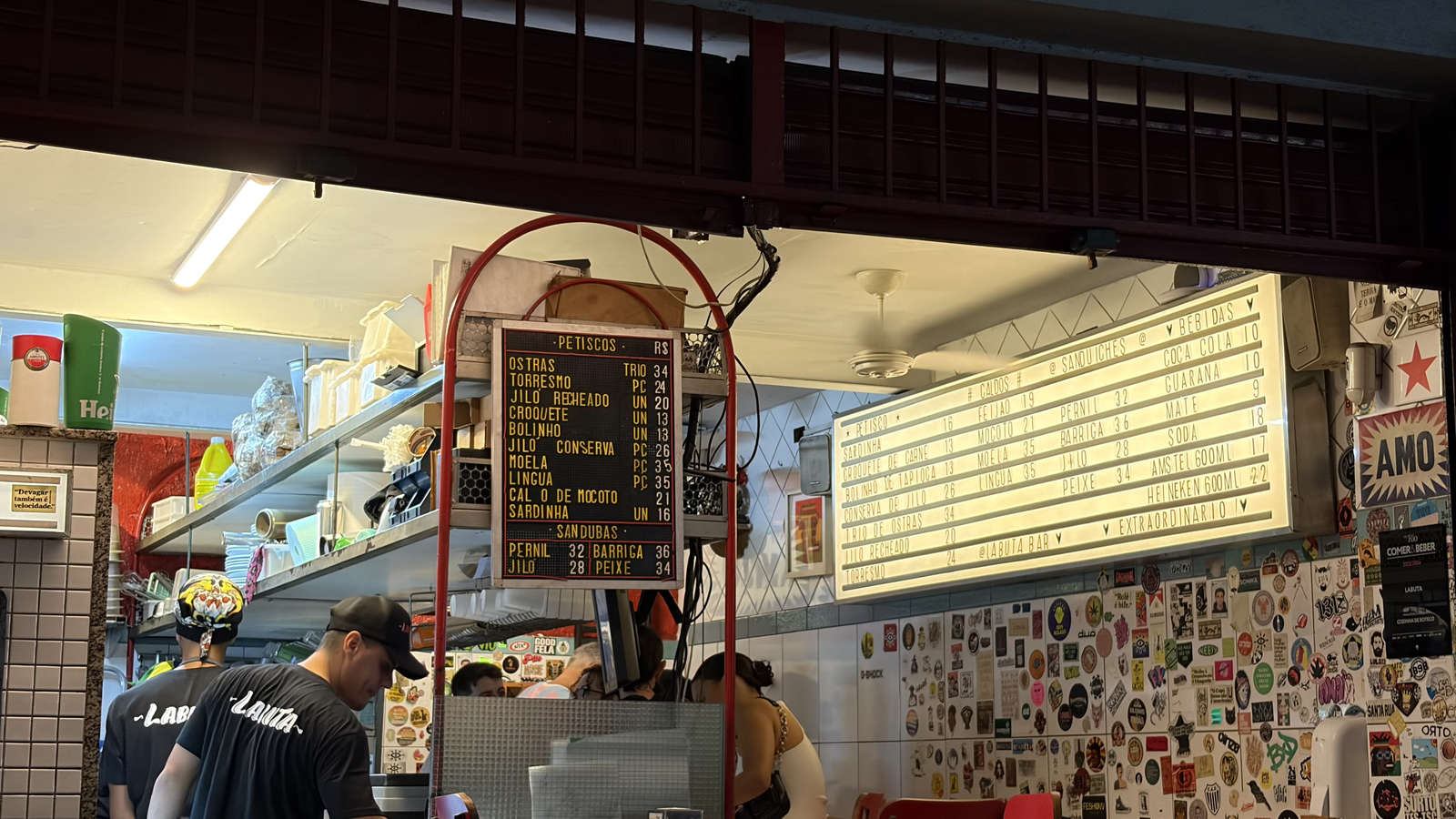
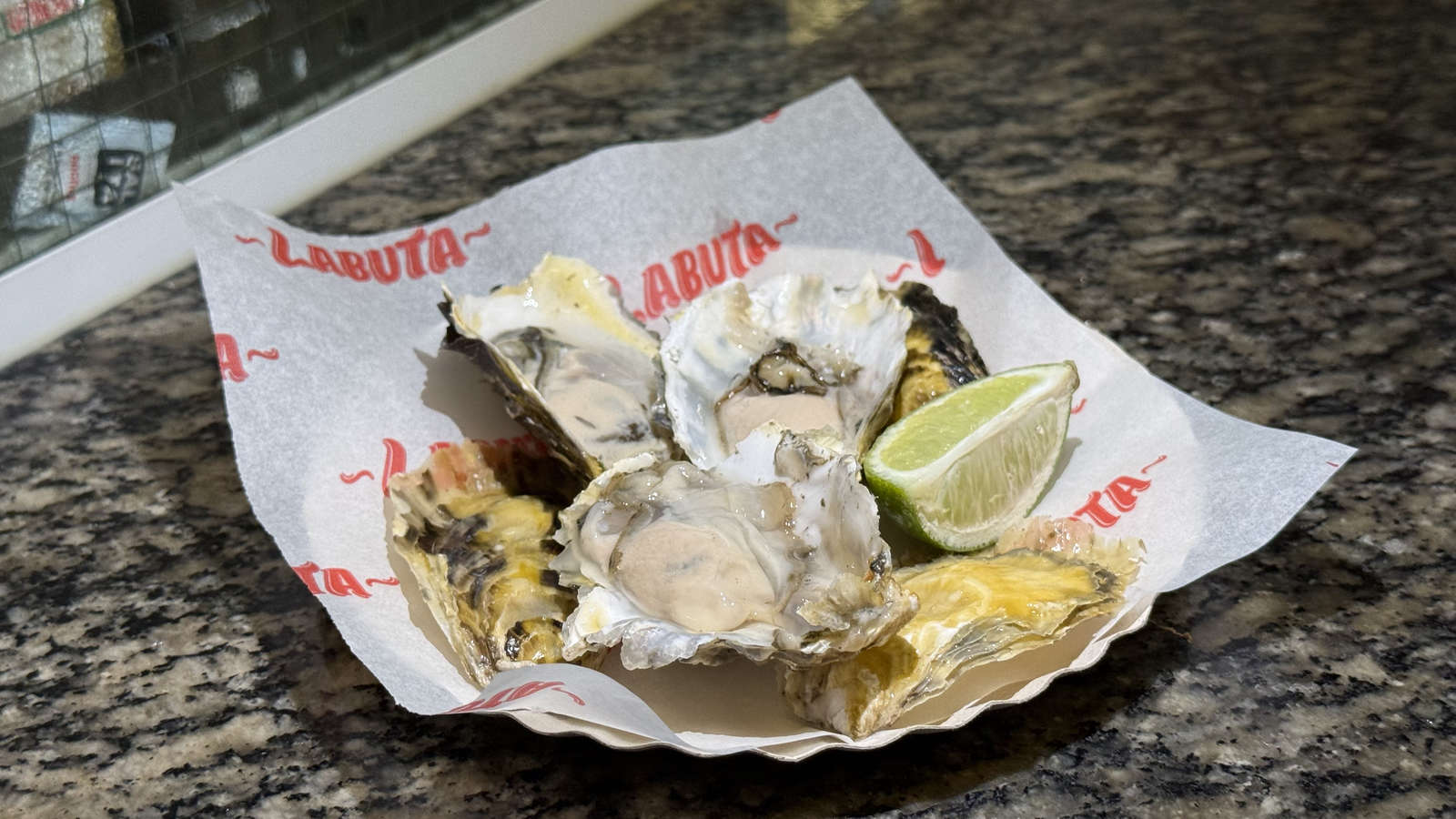
The main issue is the price. Once the 12% service charge is added, each oyster costs almost R$12.70, making this the most expensive option of the three.
We would not make a special trip solely for the oysters. But as part of a visit to Labuta itself, why not?
A taxi or Uber is the easiest way to get there. During the day on weekdays, you can take the metro and walk the remaining distance. In the evening, for a visitor unfamiliar with central Rio, we would choose a car.
First place — Britânia Rio-Lanches: R$8 and no fuss
Price: R$8 per oyster. No service charge.
Maps: Google Maps · Apple Maps
Now these are oysters we would make a special trip for.
Britânia also looks the least like somewhere a visitor would expect to find the best oysters of the three. It is a truly unpretentious neighborhood boteco in Tijuca. No designer interior, no elaborate plating, and no attempt to cater to foreign visitors. Just a counter, bottled beer, everyday food, regulars, and folding tables right on the sidewalk.
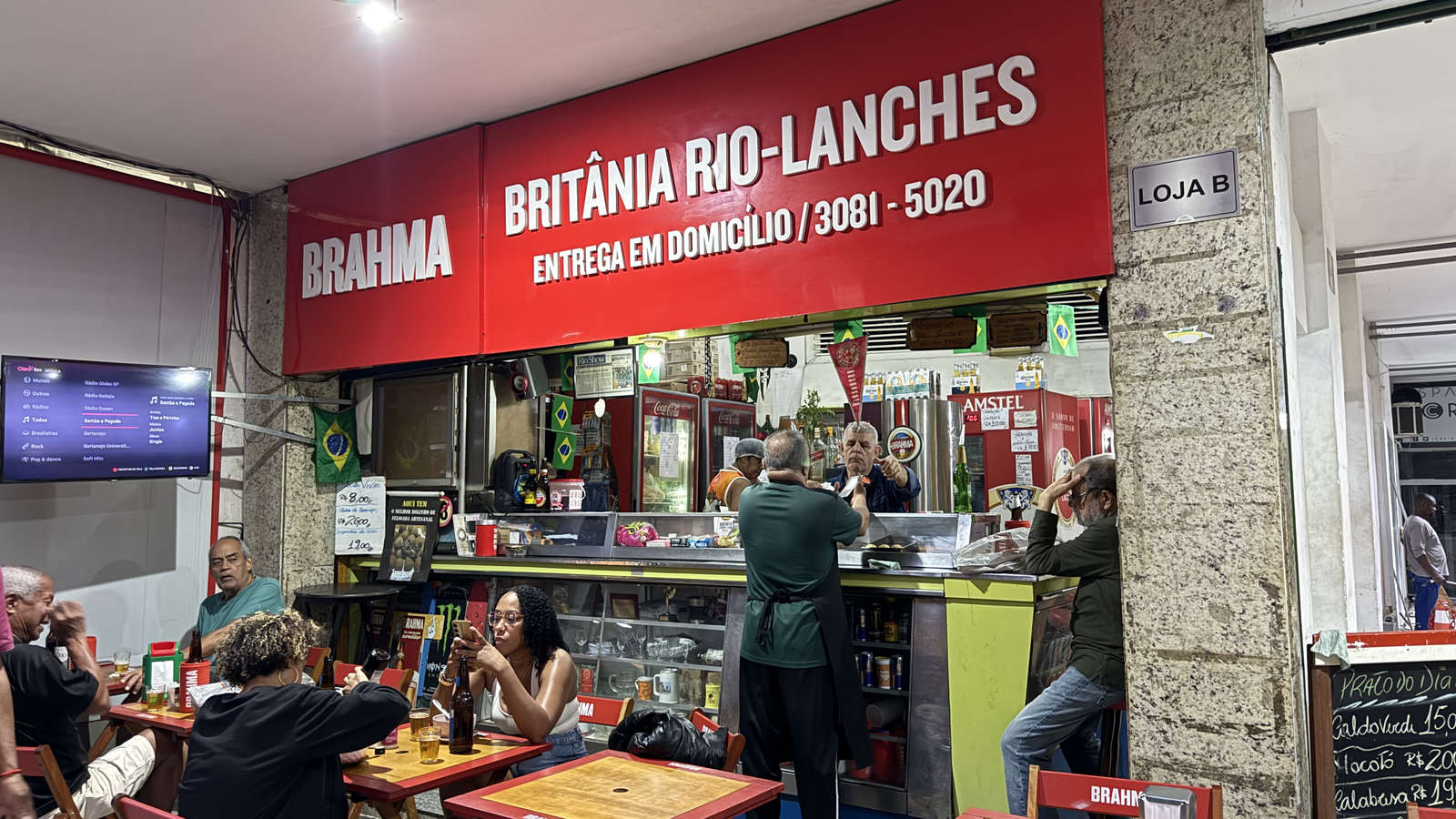
If you have never been to this kind of place in Brazil, your first reaction might be: “Are we sure this is the right place?”
It is.
And oysters here are no recent gimmick aimed at tourists. Back in 2017, O Globo wrote about Britânia as a little-known Tijuca pé-sujo, an extremely basic neighborhood bar whose unexpected specialty was fresh oysters. The owner explained that he had first brought them in for himself, then offered them to customers. They were such a hit that they stayed on the menu. Even then, a supplier was bringing oysters from Santa Catarina every day.
The name has a nice story, too. Britânia stands at the entrance to an old shopping arcade and was named after the Britânia cinema that once operated inside it, closing back in 1973.
We learned all that later. During the tasting, something else mattered much more: these oysters looked different from the others before we even tried them.
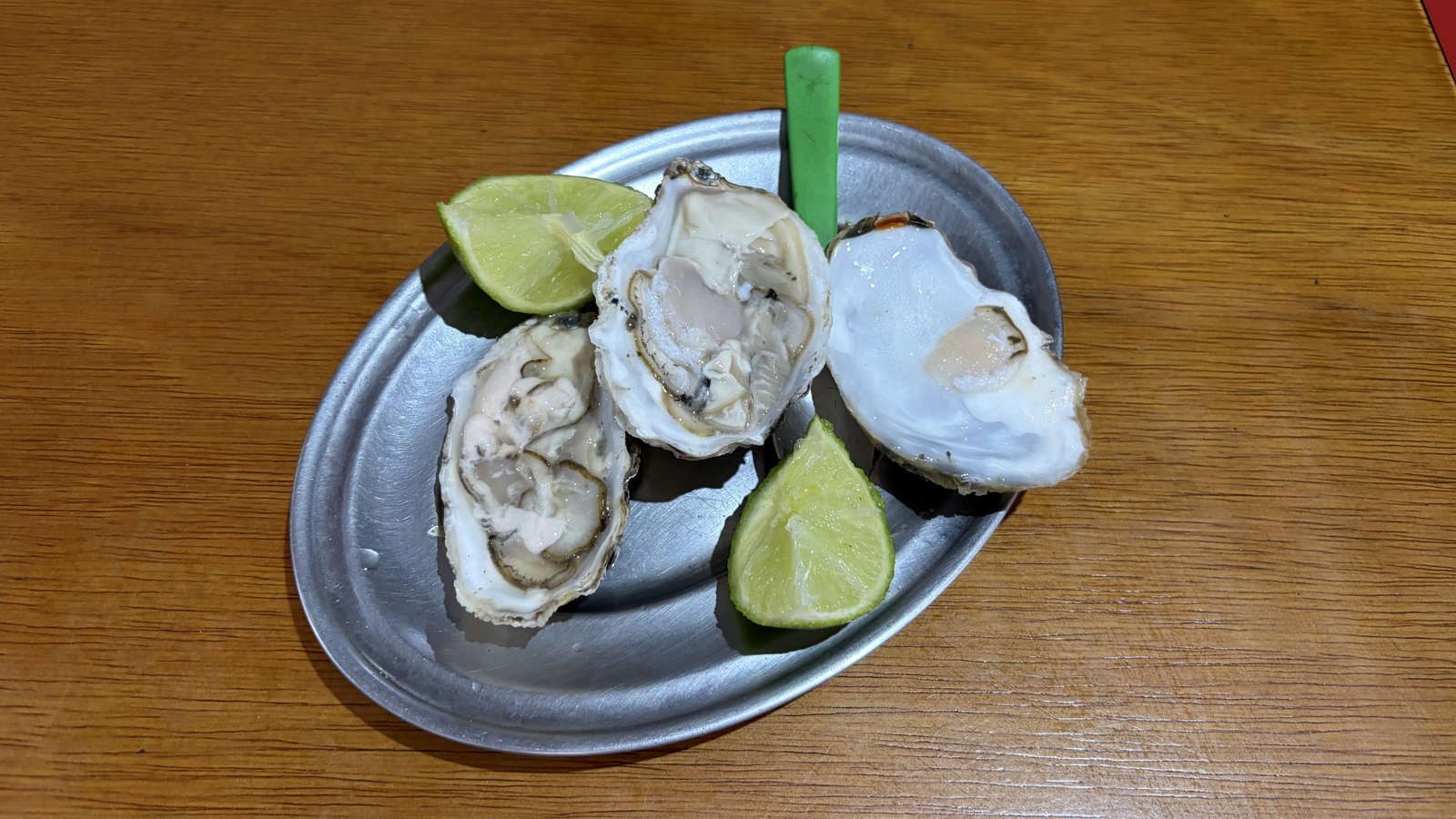
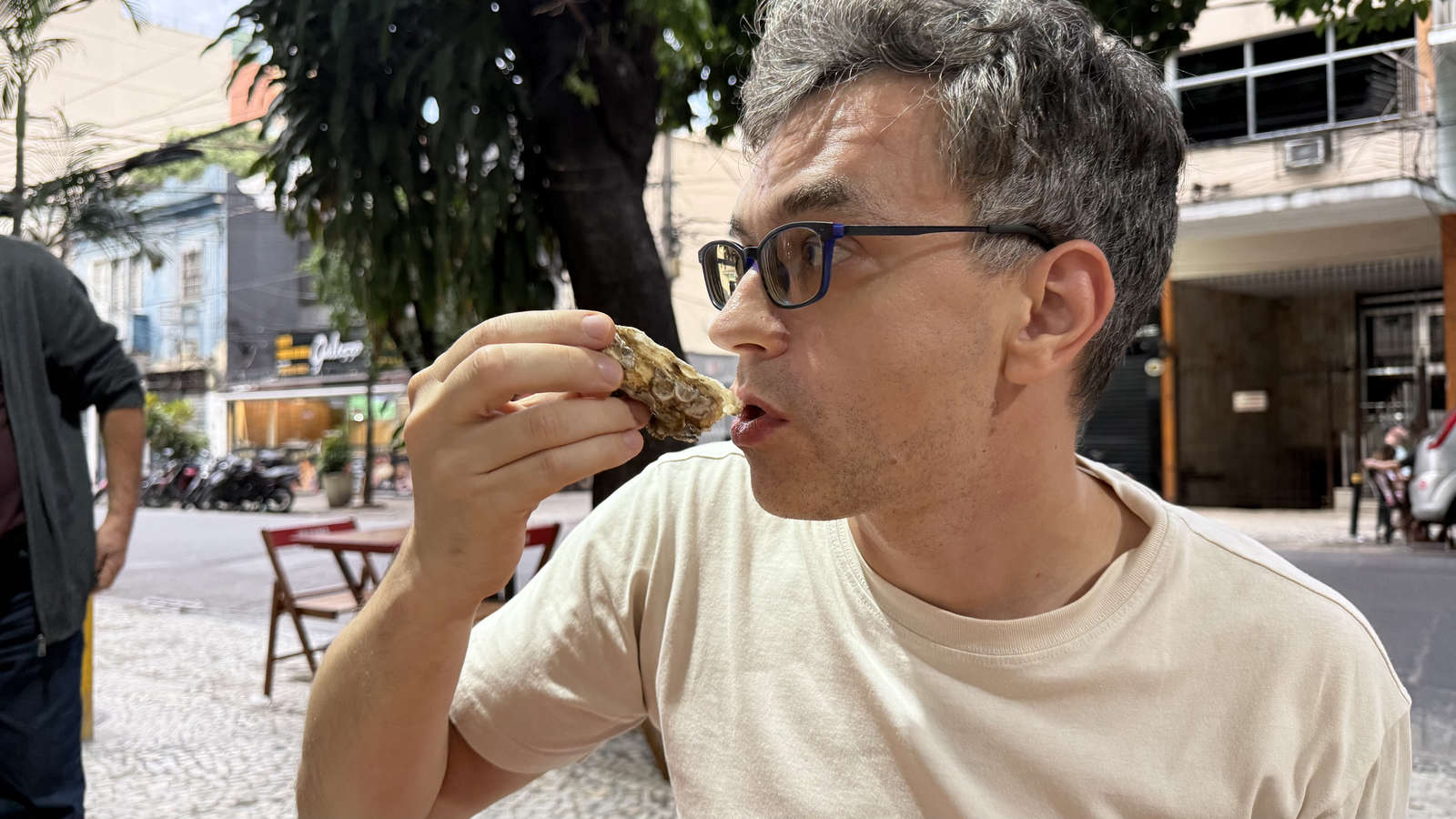
Large shells. Inside, a genuinely big, plump oyster almost filling the cup. Then the flavor: bold, rich, and briny. This is the kind of oyster that makes you understand why people eat them raw: first the saltiness of the sea, then a firm texture and a long finish.
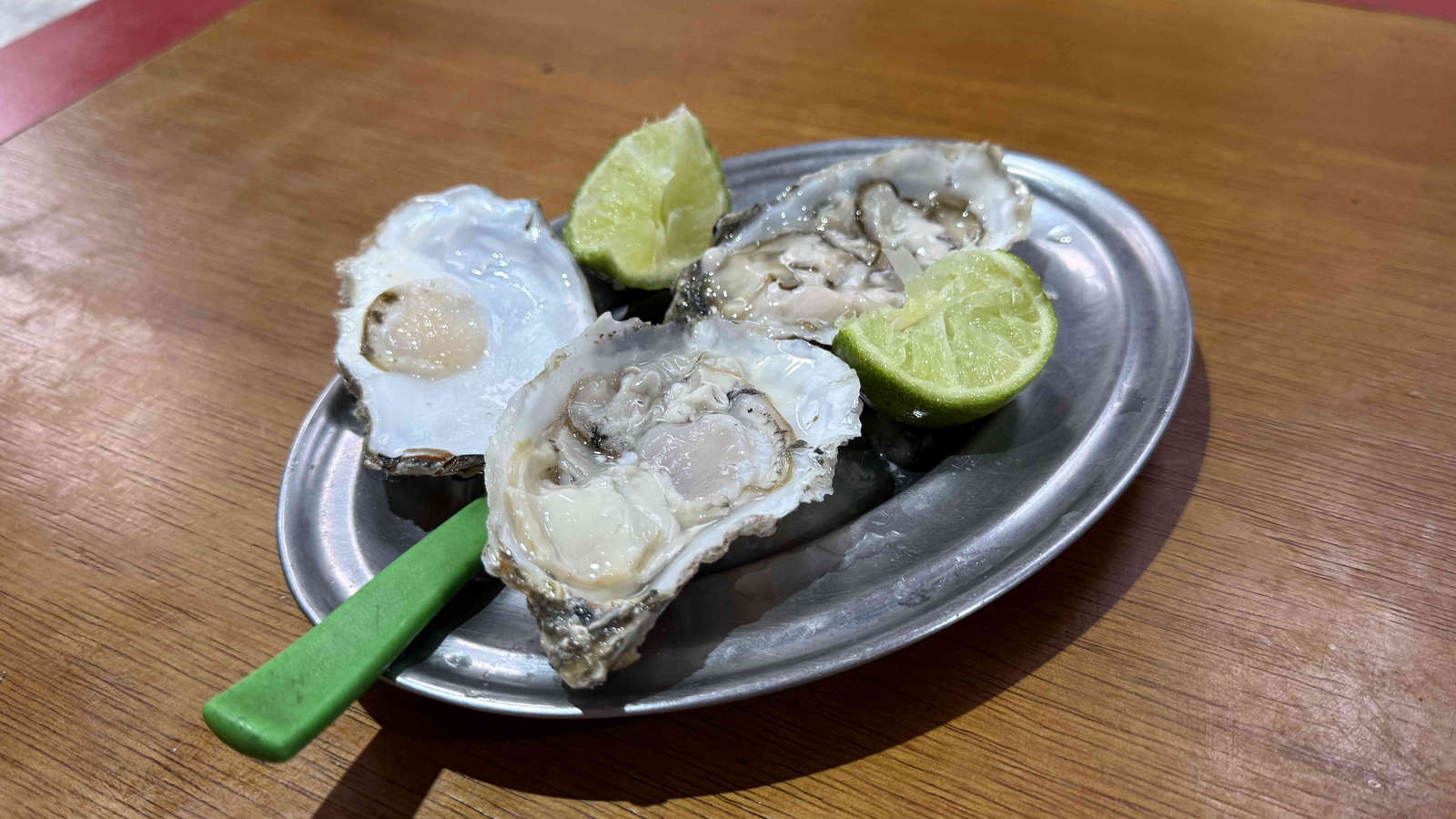
Compared with Britânia, the previous two tastings felt rather underwhelming. The best part? This was also the cheapest option.
One oyster costs R$8. No fixed sets. Want one? Order one. Want three? Order three. Want to check that you did not imagine how good the first one was? Order another. And there is no service charge.
For someone trying raw oysters for the first time, this is an ideal way to order. You do not have to buy six of something you may still be figuring out how to eat.
The presentation is as simple as it gets: oysters and lime. There is no beer on tap, only bottles. You can sit at the tables outside or inside at the balcão, the counter. If you take a table, just wait for a server; unlike at Labuta, we did not have to hunt down a member of staff.
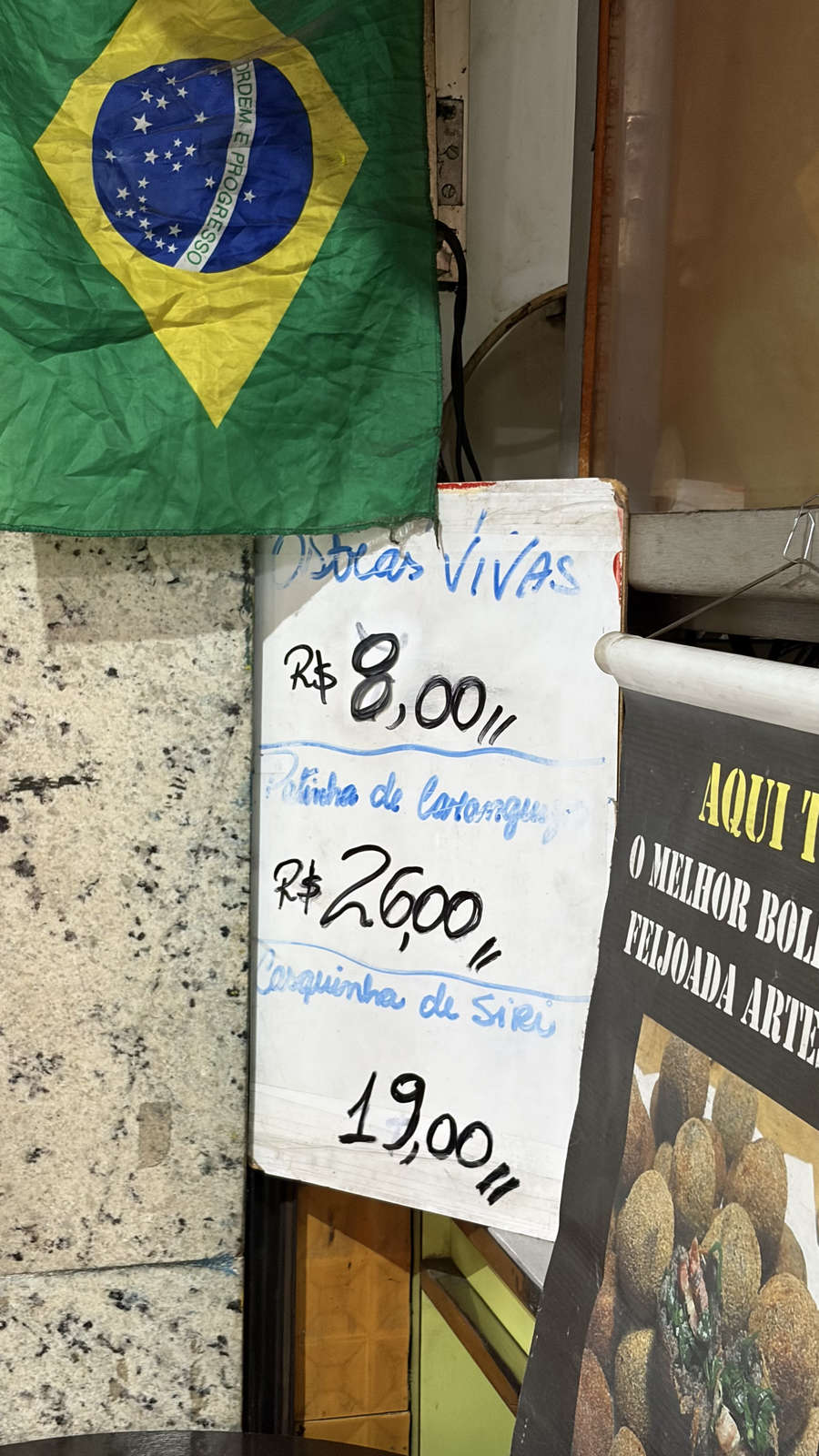
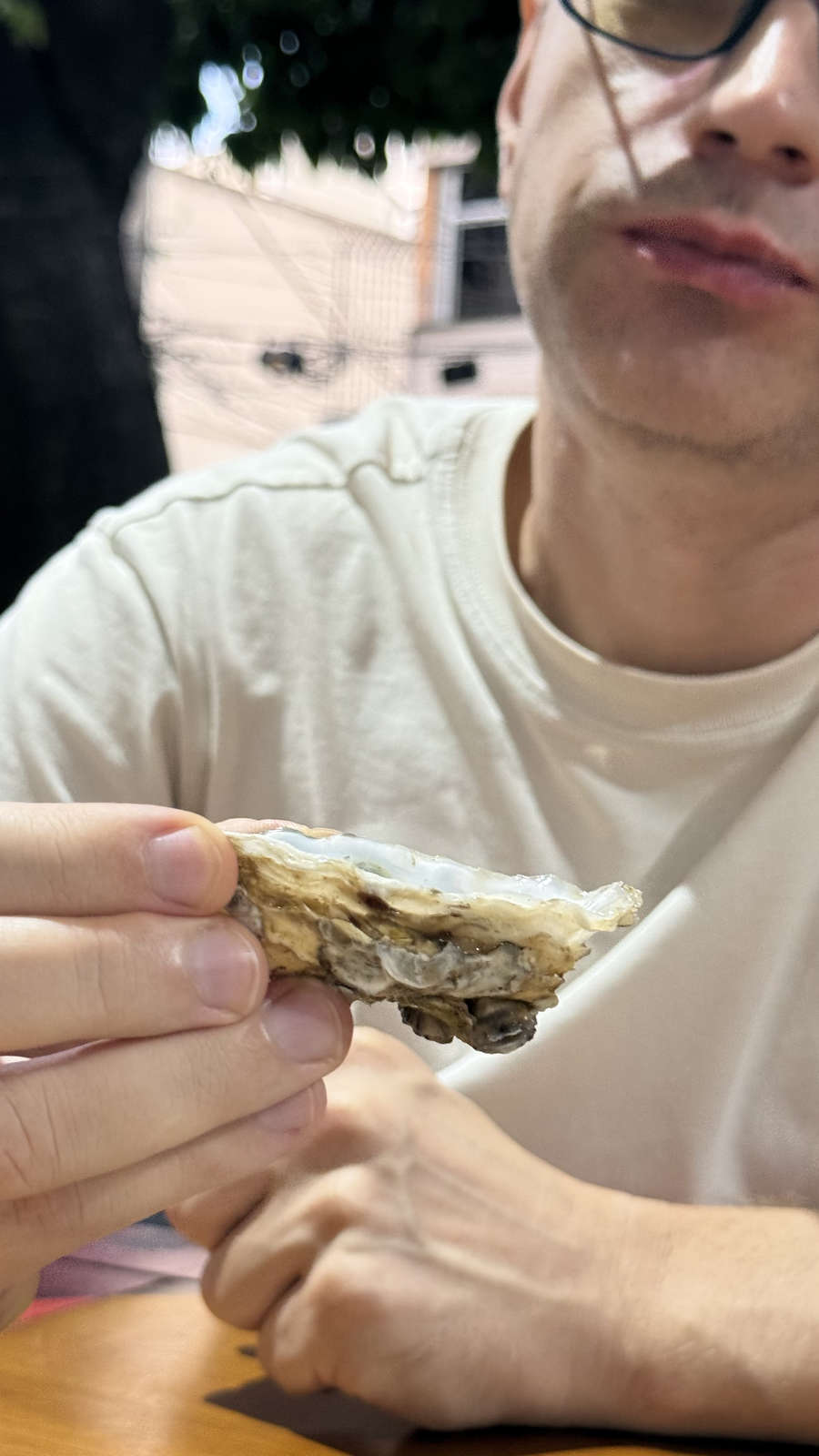
The main drawback is obvious: the location in Tijuca. Most visitors stay in Copacabana, Ipanema, or Leblon, so they are unlikely to happen to walk past Britânia. There is another practical downside: the music is often loud, and people at the outdoor tables may raise their voices to hear one another. The atmosphere is lively, but noisy.
Getting there: the most convenient option is to take the metro to Saens Peña station, use exit C, and walk the rest of the way.
Is it worth the trip? If oysters are the goal, then out of these three places, absolutely.
Why oysters in Rio can cost just R$8
All the oysters we tried at the three venues came from Santa Catarina in southern Brazil.
If you come from somewhere far inland, where fresh oysters travel huge distances to reach a restaurant, you may think of them as an expensive imported delicacy. In Brazil, the picture is different.
Santa Catarina is the country's main center for marine shellfish farming. According to Epagri/Cedap, it accounts for almost all of Brazil's farmed mussel, oyster, and scallop production. That helps explain why something considered a luxury thousands of kilometers from the ocean can turn up in Rio as an everyday snack alongside a bottle of beer.
Here, the oyster is simply much closer to where it was grown.
Another option: Ostras na General
There is one more place we have left out of the ranking because we did not try it ourselves on this occasion.
Ostras na General is a small oyster stand that appears on the first Saturday of each month at the well-known street market on Praça General Glicério in Laranjeiras.
Fresh oysters from Santa Catarina are shucked on the spot and served with lime and vinaigrette, while a traditional roda de choro, a live choro music session, plays nearby. It sounds like more than a snack: a very Rio Saturday, with a market, street life, music, beer or sparkling wine, and fresh oysters.
Before making the trip, check the next date on Instagram: @ostrasnageneral.
We will have to try this one separately next time.
How to order oysters if you do not speak Portuguese
It is easier than it may look from outside.
Just ask: Tem ostra hoje? — Do you have oysters today?
At Britânia, you can then give the number you want: Três ostras, por favor. — Three oysters, please.
At Adega Pérola and Labuta, oysters come in fixed sets, so you can simply point to the item on the menu.
All three venues served lime. But if you want to compare the oysters' flavor, try the first one without it, then add lime afterward.
One more thing visitors should know: do not be put off by how a boteco looks. In Rio, good food does not have to sit behind a beautiful doorway. Sometimes the less a place tries to look like a gourmet destination, the more interesting the food on the table turns out to be.
Our final ranking
Third place: Adega Pérola. R$52 for six oysters plus 10% service. The easiest option for visitors and a wonderful bar in its own right, but on the day we visited, the oysters were small and had very little flavor.
Second place: Labuta. R$34 for three plus 12%. The oysters were a little bigger and more interesting than Adega's, but came with the highest price per oyster and rather underwhelming service.
First place, by a wide margin: Britânia in Tijuca. R$8 each, no service charge, and you can order just one. This is where we found the biggest, plumpest, most flavorful oysters of the three.
It was exactly what we had hoped to find at the start: an ordinary place where you can sit down, order a few fresh oysters, drink a bottle of cold beer, and leave, without committing to an expensive restaurant dinner.
No white tablecloths. No R$300 champagne. And no need to pretend you can taste the “minerality of the northwest slope” in your oyster.
Visit date and prices: September 12, 2026. Oysters are a fresh, live product, so the size, plumpness, and flavor of a particular batch may differ from what we experienced. The original article checked historical and production details against publicly available material from Veja Rio, O Globo, and Epagri/Cedap.